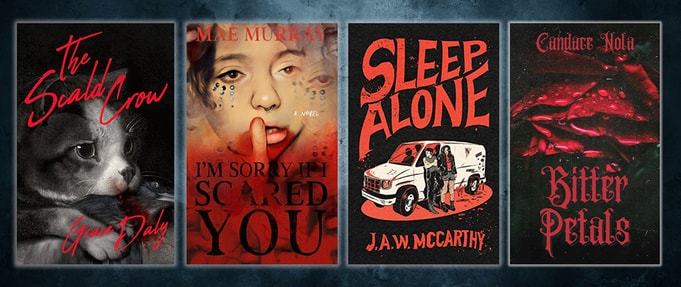
March is Women in Horror Month, and it’s always one of my favorite times of year. More than ever, it’s so important to shine a light on all the fierce stories that women are crafting in horror today.
Recently, I spoke with six incredible female writers about their thoughts on the genre as well as the state of publishing overall. One thing we agreed on wholeheartedly: women are doing some truly remarkable work in horror today, and there’s no doubt that we’re flourishing in plenty of different areas of the genre.
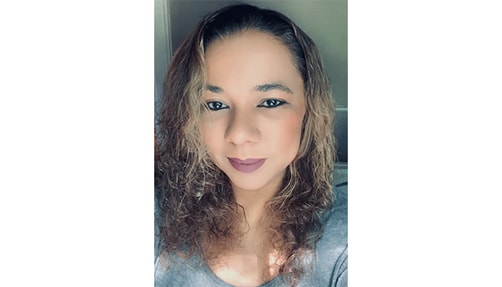

Candace Nola
“Honestly, I feel like Women are thriving across the board in almost all subgenres of horror,” says Candace Nola, author of Bitter Petals.
“The biggest ones seem to be literary horror, folk horror, grief horror, psychological horror/feminine rage, and body horror. Many of my peers seem to be branching out and getting out of their comfort zones to explore all areas of horror across the board right now, which is wonderful to see.”
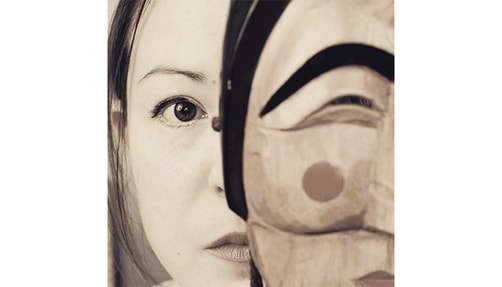
Kristy Park Kulski
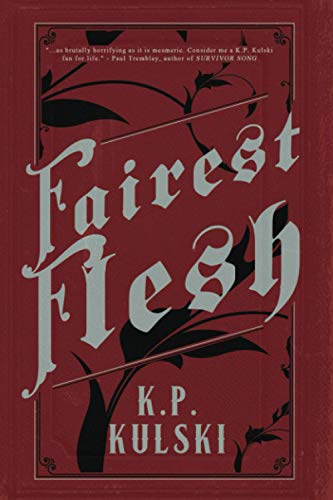
“I would say—Gothic. It’s one of my favorite subgenres to read and write in,” says Kristy Park Kulski, author of Fairest Flesh and editor of Silk & Sinew: A Collection of Folk Horror from the Asian Diaspora.
“I find the subgenre is fertile soil for examinations on not only women’s issues, but colonization, immigration, racism, and economic disparities. At the same time, women writers thriving in gothic horror scene isn’t a new development… I mean, we’ve been flexing all the way back to the time of fairytales—we all know the woman who conquered Bluebeard is an absolute queen. She is us.”
____________________

____________________
Fairest Flesh
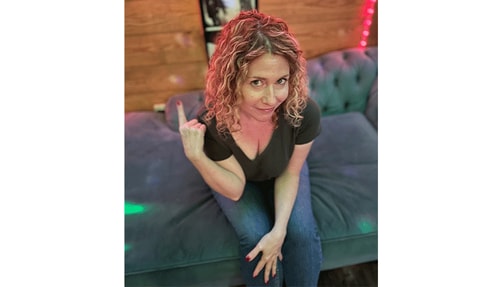
Rebecca Rowland
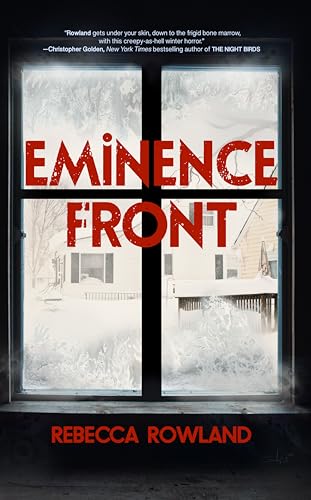
“Women are really kicking ass in body horror, but specifically, body horror used as allegory,” says Rebecca Rowland, author of Eminence Front.
“The Bodies Full of Burning anthology edited by Nicole Wolverton tackles menopause and perimenopause from every angle imaginable; Julia Ducournau’s films (Raw, Titane) explore issues of identity, both coming of age and gender fluidity. In The Eyes are the Best Part, Monika Kim addresses the objectification of Asian women.”
____________________
____________________
Eminence Front
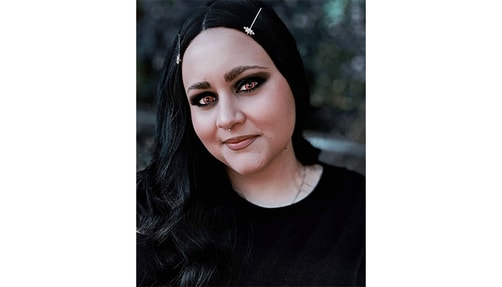
Mae Murray
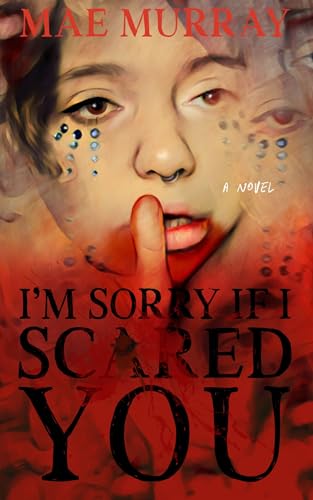
“I think a certain brand of weird girl fic is very in right now,” say Mae Murray, author of I’m Sorry if I Scared You.
“I’m loving the political horror coming from women right now, and the historical/gothic/folk horror written by women of color right now.”
At the same time, there are areas where women are still sidelined in favor of men’s narratives.
“Conversely, I can point out one thing that really grinds my gears: the popularity of men writing narratives about menopausal and post-menopausal women,” says Mae Murray.
“I think we need more representation in Crone Lit written by actual crones. I want to see more women writers who aren’t 22 breaking into the horror fiction space, and be given all the promo, resources, and tours.”
____________________
____________________
I'm Sorry If I Scared You
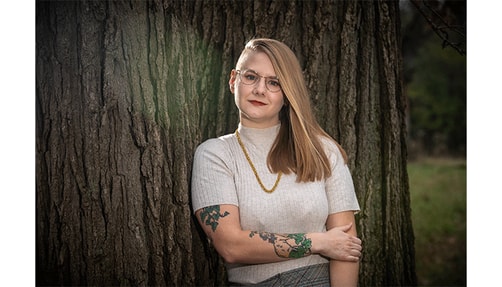
Author Grace Daly has another intriguing suggestion. “I’d love to see more women getting into the horror/comedy and pulp spaces. I think women are often both overtly and covertly encouraged to write about trauma and to have some sort of social commentary in our work; I include myself in this category,” says Daly, author of The Scald-Crow.
“Horror can be a playful genre and a great source of escapism; I’d love to see more women writers freed from the shackles of literary merit and be given space to goof off.”
____________________
____________________
The Scald-Crow

Many of us would also enjoy more so-called “unlikeable” female characters as well. “I know I would love to see more female villains, more slasher stories with female villains and strong female characters,” says Candace Nola.
There are so many women writing in the horror space today. When asked about female writers they wished more people knew about, there were so many great responses.
Candace Nola gave this fantastic list of authors. “RJ Joseph, L. Marie Wood, MJ Mars, Megan Stockton, Sara Tantlinger, Debra Castaneda, Bridgett Nelson, Viggy Parr Hampton, Eliza Broadbent, Gemma Amor, Somer Canon, V. Castro., Nicole Givens Kurtz, Tamika Thompson, so very many more!”
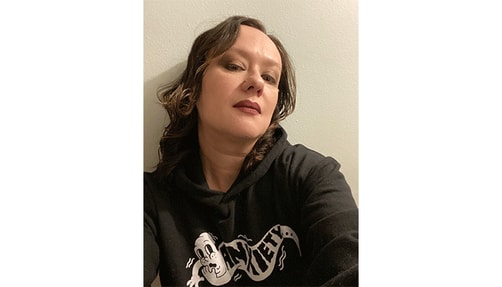
J.A.W. McCarthy
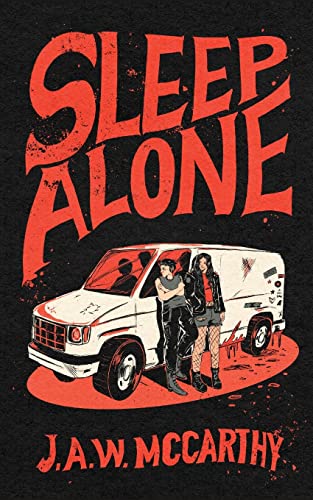
“There are so many women doing incredible work and not getting the attention they deserve,” says J.A.W. McCarthy, author of Sleep Alone.
“I'd like to highlight Tiffany Michelle Brown, SP Miskowski, and Kristy Park Kulski. I highly recommend Brown's collection How Lovely to Be a Woman, Miskowski's novel I Wish I Was Like You, and Kulski's novella House of Pungsu.”
____________________
____________________
Sleep Alone
“Angelique Jordonna is the queen of romantic splatter,” says Rebecca Rowland. “Rowan Hill is a master of the short form… Paula Ashe, Gevera Bert Piedmont, Jennifer Anne Gordon, Katherine Silva, Rae Wilde, Victoria Dalpe: pick up a book from any one of them and you’ll be blown away.”
“I feel like this is almost a trick question, because there are very few female horror authors who have the level of success men aspire to,” Mae Murray says.
“So I would say you can’t go wrong picking up most any horror book by a woman, but try to focus on indie, working class, and marginalized women (so this will probably exclude some of your traditionally published faves).”
Looking forward, these authors had so many insightful thoughts on what they hope to find in the publishing industry and the horror genre in the future.
“At the small scale, I’d love to see established writers and publishing professionals put conscious effort into reading and discussing the works of lesser-known woman writers,” says Grace Daly.
“For a larger and more difficult change, I’d love to see it be easier for all writers, including women, to be able to make a living off of releasing a smaller number of books and have to do less marketing labor.”
“While WiHM is a great initiative, publishers—particularly the big ones—need to support and market women's work year round,” J.A.W. McCarthy says.
“We're fighting to be heard—especially BIPOC and LGBTQ+ women—the other eleven months, often while men receive attention and accolades for telling our stories.”
“I’d love to see the greater horror community create physical and social spaces for women horror writers,” says Kristy Park Kulski.
“Physical when doing conferences like StokerCon—for example a room for only those who identify as women and nonbinary to hang out. As well as social connections under some sort of formal umbrella, a committee or club of women horror writers that offers support and information.”
So as March starts to wind down, please look to your TBR pile and be sure there are plenty of female horror authors on your reading list. Because we are everywhere, and we absolutely deserve more than just one month to be on the industry’s radar.
Happy Women in Horror Month!


