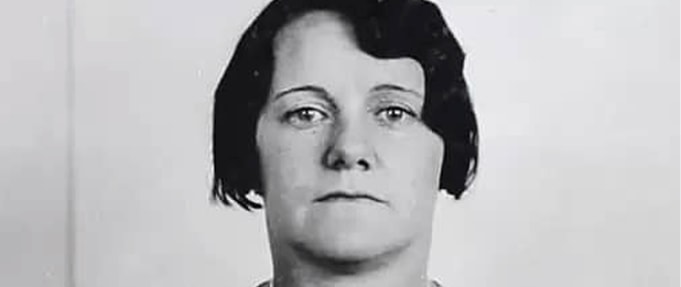
Lyda Trueblood, Lyda Southard, Flypaper Lyda, Lady Bluebeard, or The Black Widow.
She collected nicknames almost as easily as she collected victims.
Who was Lyda Trueblood?
Anne Elizabeth Trueblood was born on October 16, 1892, in Keytesville, Missouri. Her family combined “Anna” and “Eliza” and called her Lyda. Lyda was the third of 11 children and was noted as the favorite.
In 1907, the Trueblood family made the trek from the flatlands of Missouri to the highlands of Twin Falls, Idaho. Lyda was a petite, blue-eyed redhead. And her voice was so sweet and soft that it was described as the “cooing of a dove.”
She was the quintessential early 1900s woman: small, soft, quiet, and beautiful. Miss Trueblood had a certain charm about her that no one could ignore. Including her first husband, Robert Dooley.
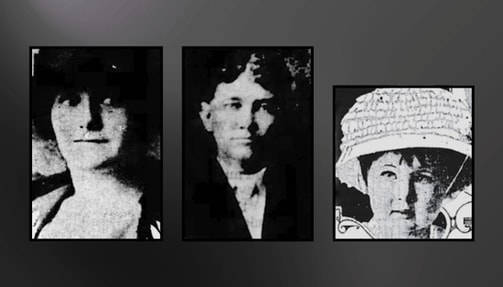

Lyda, Robert, and their child Loraine.
Photo Credit: KTVBIn 1915, her seemingly idyllic life turned to utter tragedy as 2-year-old Loraine, then Ed, then Robert, all died. Lyda claimed baby Loraine had died as a result of drinking water from a dirty well.
When Ed passed just a few months after, his cause of death was ruled ptomaine poisoning, a foodborne illness that could have been caused by contaminated drinking water.
Finally, on October 12, 1915, Robert Dooley died. While Robert had the same symptoms as baby Loraine and Ed (nausea, cramps, diarrhea, weakness), his cause of death was listed as typhoid fever.
Lyda, as the sole survivor, was awarded the life insurance policies on all three family members, totaling around $4,500.
Two years after the death of her family, Lyda married William “Billy” McHaffle in June of 1917. Once married, they sold the Dooley ranch and moved to Montana. In late September of that same year, Billy suddenly became very ill with severe cramps, diarrhea, and fatigue. He died on October 1, 1917.
Lyda was a widow for the second time. Spanish Flu was running rampant, and based on the symptoms described by Lyda, Billy’s death was labeled as influenza and diphtheria. Diphtheria was another illness caused by drinking contaminated water.
Lyda immediately collected $500 from Billy’s life insurance policy and began looking for husband number three. In March of 1919, Lyda married Harlan Lewis. Harlan was an automotive engineer from Billings, Montana.
Only four months into their marriage, Harlan fell ill. He died in July of 1919 with his cause of death listed as gastroenteritis: an infection of the gastrointestinal tract. Symptoms included severe abdominal pain, weakness, and diarrhea. With Harlan’s death, Lyda collected $5,000 in life insurance.
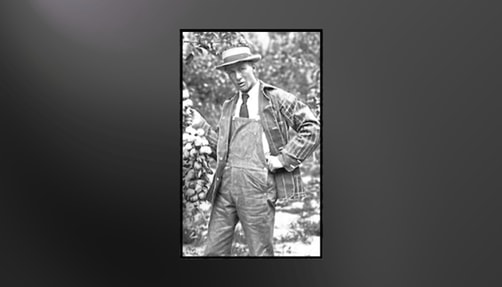
Ed, Lyda's fourth husband.
Photo Credit: KTVBLyda moved back to Idaho under a new name, Anna Mae McHaffle. Once back in the Gem State, she met her fourth husband, Ed Meyer. Ed was a ranch foreman in Pocatello, Idaho, and completely smitten with Lyda.
Just a day after marrying her, he took out a $10,000 life insurance policy and named Lyda as the sole beneficiary. Only a few weeks later, Ed fell ill.
After a few days in the hospital, Ed was recovering and seemingly on the mend…until his newlywed wife came to visit. Ed took a turn for the worse and died just one month after his wedding. His official cause of death? Typhoid fever.
How did Lyda become a suspect in murder?
Earl Dooley was a chemist in Twin Falls…and also a relative of Lyda’s first husband. After hearing about Lyda’s fourth husband’s death, he became suspicious.
Four dead husbands? With each death occurring in shorter and shorter amounts of time after wedded bliss? And all with the same ailments? Something wasn’t adding up.
Earl exhumed the bodies of Ed Dooley, Robert Dooley, and baby Loraine, where traces of arsenic were found. He brought his findings to the Twin Falls County Prosecutor Frank Stephan, and an investigation into Lyda Trueblood began.
The amount of arsenic found in Ed Meyer’s body was more than nine times the lethal limit. And Lyda had collected over $30,000 of life insurance money, or almost $500,000 today.
How did Lyda poison her husbands?
After the discovery of Lyda’s horrific crimes, one of her nicknames was Flypaper Lyda.
It appeared that Lyda was boiling the arsenic from fly paper (used to kill flies and other insects) and adding the poison to her prepared meals that she would then feed her victims.
The main symptoms of arsenic poisoning? Vomiting, abdominal pain, fatigue, weakness, diarrhea…and death.
How was Lyda finally caught?
An arrest warrant was immediately issued, but Lyda was already married to her fifth husband, Paul Southard. Paul was a Navy petty officer, and they were stationed in Hawaii.
Lyda was arrested and extradited back to Idaho to stand trial for the murder of her fourth husband, Ed Meyer. In 1921, Lyda was convicted of second-degree murder and sentenced to 10 years to life in prison. Paul Southard filed for divorce.
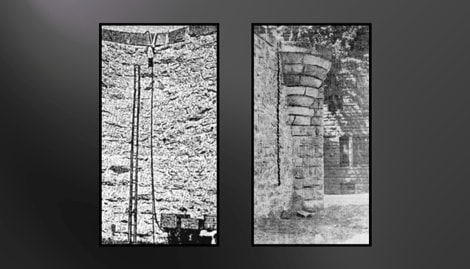
Ladder and rope Lyda used to escape.
Photo Credit: The Idaho StatesmanWhat became of Idaho’s Black Widow?
Lyda was sent to the Idaho State Penitentiary, but on May 4, 1931, she escaped by climbing over the stone wall. Lyda made it as far as Denver, Colorado, and worked as a housekeeper for Harry Whitlock and his mother.
But soon, Harry’s mother would suffer and die from a stomach ailment. Lyda and Harry married soon after, but when a story about her appeared in the newspaper, she left Harry and fled to Topeka, Kansas.
After 15 months of freedom, Lyda was caught in Kansas and returned to Idaho to serve the remainder of her term. Lyad served another nine years before being released on parole in 1941. She would be pardoned for her crimes two years later.
Spending the rest of her life in Utah, Lyda died of a heart attack at the age of 65. The name on her tombstone? Anna Shaw. Her seventh and final husband, Hal Shaw, disappeared two years after they wed, and his whereabouts remain unknown.
Featured image: Wikimedia Commons


