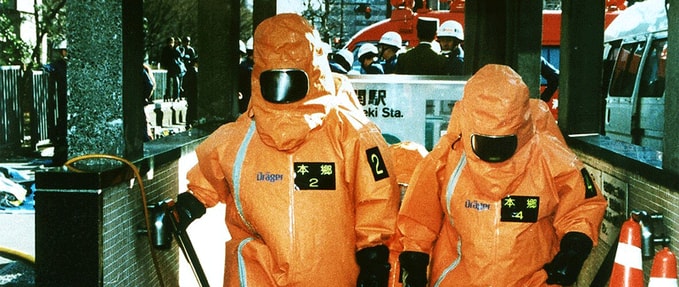
Poison. According to Plato, it’s what Socrates was forced to drink when he was condemned to death. According to Shakespeare, it’s what Juliet used to take her own life, and what was poured into the sleeping ear of Hamlet’s father.
Throughout history, poisoning has been a popular method of both suicide and murder—intimate, innocuous, and often difficult to detect.
However, while poisoning is frequently associated with “Black Widows” and others who take the lives of those closest to them, it has also been used in assassinations, terrorist attacks, and indiscriminate slayings.
Here are a few of the most notorious poisonings in history, from the Jonestown massacre to the mysterious death of one of China’s last emperors…
Jonestown

 Photo Credit: Wikimedia Commons
Perhaps the most notorious—and certainly one of the largest— cases of murder by poisoning took place at the Peoples Temple Agricultural Project in Guyana. Better known by its informal name of Jonestown, home of the religious organization known as the Peoples Temple, founded and run by Jim Jones.
At the time, the deaths of more than 900 people, most of them by cyanide poisoning, were reported in the way that the cult’s leader had wanted: as mass suicide. Subsequent investigation, however, has concluded that many of the victims were given cyanide against their will, sometimes via injection.
Most of those who “drank the Kool-Aid,” as is the colloquial expression spawned by the incident, did so at gunpoint, making Jonestown one of the most massive examples of murder by poisoning in history.
Tokyo Subway Sarin Attack
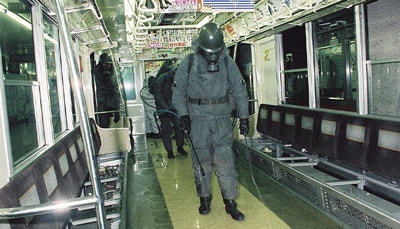 Photo Credit: Wikimedia Commons
While the victims of the Jonestown massacre were the cult’s own members, the adherents of Japan’s Aum Shinrikyo cult turned their poisoning efforts outward.
Granted religious corporation status by the government, the members of Aum Shinrikyo had been secretly stockpiling biological weapons for years and had attempted a handful of previous attacks that had not been as deadly.
For the infamous subway attack in 1995, five members of the cult boarded various trains on the Tokyo subway during rush hour, carrying a liquid nerve agent called sarin in plastic bags wrapped in newspaper.
When they arrived at prearranged stations, they punctured the bags and left them on the floor of the trains, where the sarin would convert from liquid to gas. Ultimately, the attack killed fourteen people and injured many more, some of whom subsequently died.
More than 200 members of the cult were arrested, and thirteen were executed in relation to the attack.
The Chicago Tylenol Murders
 Photo Credit: Wikimedia Commons
If you’ve ever struggled to open a bottle of over-the-counter medicine, only to be met with a variety of silver foil seals, you can thank a string of anonymous murders that took place in and around Chicago in 1982, called the Tylenol Murders.
In all, at least seven people died from ingesting Tylenol capsules that had been doctored with potassium cyanide—the youngest was only twelve years old.
Not only was the culprit never caught, but the incident provoked numerous copycat crimes in subsequent years, slaying several more victims.
It also prompted pharmaceutical, food, and other industries to develop and implement the tamper-resistant packaging we’re all familiar with today.
Charles Francis Hall
 Photo Credit: Wikimedia Commons
In 1871, American explorer Charles Francis Hall was leading an expedition aboard the USS Polaris that intended to be the first to reach the North Pole. He never made it.
Instead, the pole would remain beyond explorers' reach until around 1909, when Robert Peary, Matthew Henson, and four Inuit guides are widely credited as the first explorers to reach it.
Instead of planting a flag on the North Pole, Charles Hall fell ill aboard his ship, blaming his indisposition on poisoning from one or more members of his crew, including the expedition’s lead scientist, Emil Bessels.
It wasn’t until nearly a century later that the proof of Hall’s accusations came out, however, when Hall’s biographer had his body exhumed and conducted tests which showed that he had ingested large doses of arsenic in the last weeks of his life.
Mary Ann Cotton
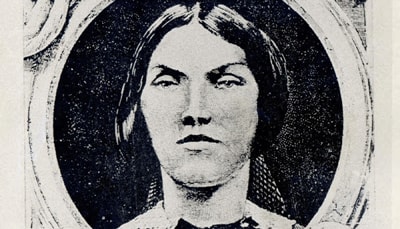 Photo Credit: Newcastle Chronicler
In 1873, Mary Ann Cotton died by hanging in England’s Durham Gaol. She was convicted of murdering her stepson, Charles Edward Cotton, left to her (now deceased) fourth husband from a previous marriage.
Though Charles’s death was the only one with which she was charged, the investigation into his murder revealed troubling patterns in Mary Ann Cotton’s life. Specifically, that quite a lot of people around her seemed to turn up dead from “stomach ailments,” usually after she was named the beneficiary in a life insurance policy.
In all, she is believed to have slain as many as 21 people, among them three husbands and eleven of her thirteen children, most done in via the same method she used for Charles: arsenic.
Nannie Doss
 Photo Credit: Wikimedia Commons
No family member was safe from Nannie Doss, whose various nicknames include “Lady Blue Beard,” the “Giggling Granny,” and, of course, “Black Widow.”
In October of 1954, she confessed to killing not only four of her five husbands (most of whom she met via lonely hearts columns), but also two children, two grandchildren, her sister, her mother, and a mother-in-law.
While not all of them were slain in the same manner, arsenic and rat poison were among the methods Nannie Doss put to work. It was arsenic that proved her undoing when it was found in high concentrations in the body of her fifth and last husband, Samuel Doss.
Despite her confession, she was charged only with the murder of Samuel Doss and sentenced to life in prison, where she died of leukemia in 1965.
Guangxu
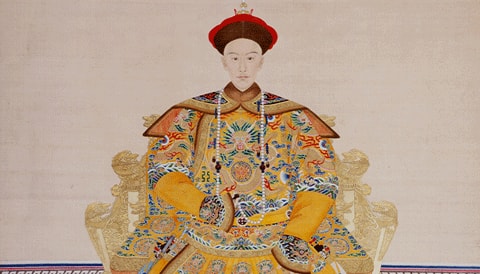 Photo Credit: Wikimedia Commons
The second-to-last ruler of imperial China, Guangxu, ascended to the throne when he was only four years old, and his rule ended when he was only 23, after he was ousted by a coup organized by his own aunt.
He spent the next ten years of his life effectively under house arrest and died unexpectedly in 1908 at the age of 37. For decades, competing theories about the emperor’s death prevailed, with historians unable to reach a consensus.
It was not until forensic tests were conducted on his remains in 2008 that the truth became clear. These tests showed incredibly high arsenic levels, indicating that Guangxu was poisoned.
But who did the deed? Some suspect the same person who overthrew him, his aunt, the dowager empress Cixi, who died herself only a day later.
Ultimately, though, we will probably never know.
Featured image: Wikimedia Commons


