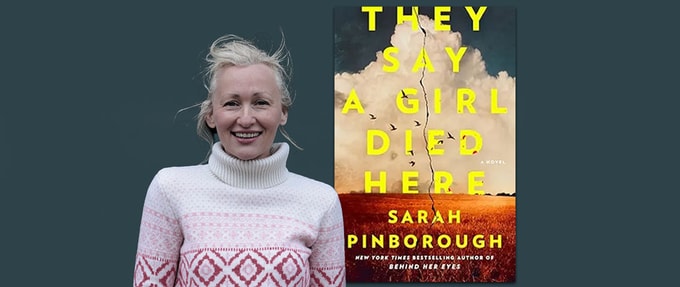

English author and screenwriter Sarah Pinborough started her career in horror before dipping her toes into bloody thrillers with the phenomenally popular book Behind Her Eyes (now a Netflix TV series). After publishing books in 25 territories worldwide with over 25 novels across genres, she found a new level of success with the thriller genre in recent years.
Once Behind Her Eyes dropped, several novels by Pinborough were optioned for television, and Insomnia was ultimately fully adapted as a 2024 Paramount+ series. (Side note: Pinborough has a history as a BBC screenwriter.) Her latest small-town thriller book, They Say a Girl Died Here, was recently optioned by Carnival Films for television.
Pinborough’s career has taken a widening path through multiple genres. The writer won the 2009 British Fantasy Award for Best Short Fiction (Best Short Story) for her story "Do You See", which was published in Myth-Understandings. Pinborough has gone on to win multiple British Fantasy Awards and a Crime Writers' Association Dagger Award for her horror, fantasy, and thriller fiction.
The self-effacing author lives in the historic town of Stony Stratford, the home of the Cock and Bull story, with her dog Ted. She took some time out of her busy writing/editing/promotional schedule to uncover with us some of our bibliographic favorites from 2004’s The Hidden to this year’s They Say a Girl Died Here.
It’s a gripping ride, so let’s get started.
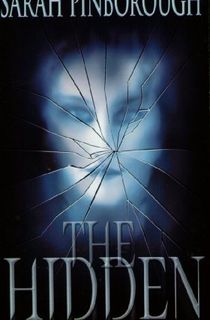
The Hidden
Looking back on The Hidden as Pinborough's debut is surreal for her. She doesn’t remember too much, beyond its terrifying plot setup.
“I remember the opening chapter because I’d actually written it just as an idle ‘no idea where this is going’ couple of pages about three years earlier,” said Pinborough via email. When she found the snippet of the story while going through old paperwork, she had the idea for the book come to her in a rush.
“Just goes to show: never delete any bits and pieces of ideas!” she joked. “I’ve always been fascinated by memory loss and body swaps and possessions, and this was my first play in that sandpit.”
In the opening of The Hidden, a woman wakes up with a terrible headache, and then stumbles into her bathroom and grabs some pills. As she gazes in the mirror, it explodes - then she wakes up with an awful case of amnesia. The loss of memory makes Rachel feel empowered since she gets to escape her dull life.
The Hidden started Pinborough on the path to fast-paced thrillers. Some convenient detective plot threading ensues at the end, but the evil entity using mirrors as portals into our world just works on a pure creep factor level, and Rachel as a character keeps it riveting for a tight 369-page paperback.
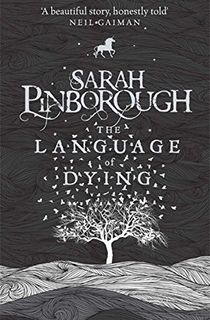
The Language of Dying
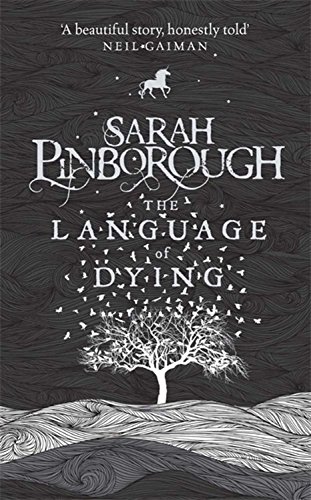
Pinborough won the British Fantasy Award for The Language of Dying. The cinematic novella blends multiple genres beyond fantasy, but the characters are the most memorable, as Pinborough follows a woman sitting at her cancer-beset father’s bedside, watching the clock tick away the last moments of his life.
A dark creature comes calling during this troubled time. Pinborough is still enraptured years later by the imagery from that book. “I fell in love with that black unicorn out in the night somewhere, all heavy and earthy, and pawing at the ground.”
Some readers have taken the creature as real or just a coping mechanism for a grieving daughter. Pinbrough doesn’t have a firm opinion either way on it. “The creature was real to the character, and I was writing from her perspective, so I saw the creature as real, but of course it was probably an internal delusion when seen from the outside world.
She’s the only one who ever experienced it in the world of the book. I guess there’s a part of me that wants it to be real, but it’s most likely just in her head.”
Breeding Ground
Breeding Ground (2006) is an apocalyptic horror story that follows a couple, Matt and Chloe, who expect a baby. Chloe gives birth to a violent, spider-like creature that snacks on humans. Reminiscent of Richard Matheson’s short story “Born of Man and Woman,” Pinborough was inspired by John Wyndham and his book The Day of the Triffids.
“I pretty much enjoyed all of the writing because it was really good fun to write a ‘creature feature,’ as it were. She set the story in her hometown, so all the characters had to fight off the spiders with various tools since the UK is a country without personal guns. Pinborough also just had fun with the throwback spider concept overall.
“I’ve learned to rub along with spiders (Thanks to Adrian Tchaikovsky’s Children of Men!) and appreciate them, but they do tend to creep us out,” she noted. “I can’t imagine pitching a giant spiders book now. I never write action because I find it hard, and I had to do that in this book.”
The author ended up enjoying the concept so much that she wrote a second book in 2009 called Feeding Ground, set in the same apocalyptic world. Both books were prime examples from Leisure Books, a mass market paperback publisher specializing in horror and thrillers that operated from 1957 to 2010.
Insomnia
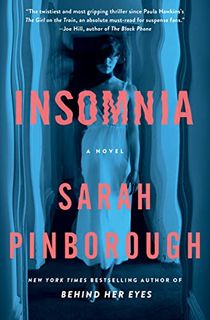
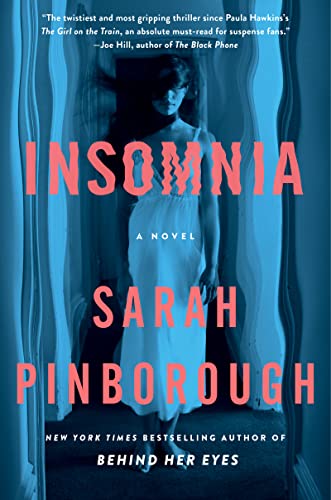
Insomnia’s main character, Emma Averell, and her relationship with her mother, Patricia, is defined by severe trauma, estrangement, and a real fear of generational repetition. Pinborough jokes about the book’s mother-daughter relationship from the jump:
“When I’m feeling facetious, I always say it’s a novel about every woman’s basic fear of turning into their mother!”
The opening of the book starts with a car crash out of nowhere and then Emma’s life unravels from there. Pinborough found the book cathartic and even darkly playful, since it also wrestles with middle age for women.
“Basically, Emma is terrified that she’s going to lose her mind at 40 and do something terrible just as her brother did,” said Pinborough. “But the book also plays into how we can misinterpret things and how ultimately (in the main anyway) mothers will do whatever it takes to protect their children.”
Pinborough agrees with the old poem, “They fuck you up, your mum and dad…”
“It’s impossible for parents not to leave some emotional damage with their children from something they struggle with from the parenting they received. We all bring our own traumas to the table with family - if you try to avoid repeating one, you’ll probably cause another. It’s human nature. I guess it keeps therapists in business!”
13 Minutes: A Novel
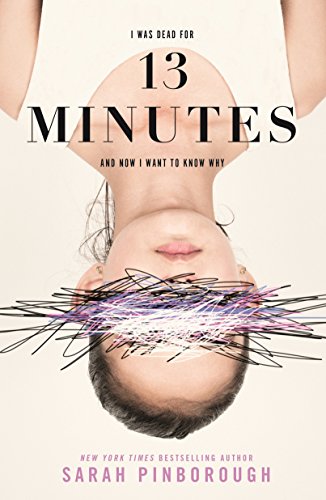
Pinborough shifts to YA psychological suspense for her story of Mean Girls in the Instagram age. This book deepens the writer’s love for plot twists and follows Natasha, who doesn’t remember how she ended up in icy waters. Did her friends try to kill her?
Pinborough loved writing 13 Minutes’ teenage girls, especially Natasha. “She was great fun, as was Becca, so I didn’t find any of it uncomfortable.”
“I’m an ex-teacher, and I loved teaching teenagers, but sometimes I joke that teenage girls are the closest to psychopaths you can get. The intensity of their worlds and their friendship dynamics that can turn on a dime. Getting into their heads was a great reminder of how tough it is being that age.”
Pinborough also drew on her experience from living at an all-girls’ boarding school until she was sixteen, where she noted that it was, “dog eat dog and the shifting cliques and gangs and being popular and then unpopular—was quite something!”
Later on, she attended a boys’ school, which took girls in sixth form (the final two years of secondary education, ages 16 to 18). That was “eye-opening” for her as a teenage girl.
“So much more straightforward. Far less bitchiness or back-stabbing. I’m sure they had their own problems, but they were definitely nicer to each other.”
Note: Seek out the audiobook version.

Behind Her Eyes
Massive international bestseller and hit Netflix series adaptation.
This is the huge career book for Pinborough. Behind Her Eyes is also a solid starting point for any fresh reader working their way through her books.
“Where 13 Minutes was a kind of warm-up to a psych thriller, this was my first dipping of my toes into the genre fully,” said Pinborough. “It was quite hard to write because I had to keep the characters honest whilst not revealing the truth of the situation to the reader, so there were several moments when I was pulling my hair out, but I remember being excited all the way through writing it.”
The thrilling final chapter was written as part of the book pitch, and she knew if her publisher got behind it, this was “the kind of book people talked about.”
Beyond the incredible twist-on-twist ending, what keeps the novel from spinning out of control is the main character Louise at its center. A single mom, a secretary, meets a man at a bar and then finds out that the married man is her new boss, David.
She then meets Adele, who’s new to town and in need of a friend. Turns out, Adele is married to David. Sounds like a typical love triangle thriller setup, but you have no idea where this completely unhinged book will lead you.

Cross Her Heart
How do you follow up a juggernaut of the thriller genre like Behind Her Eyes? Cross Her Heart has the dark female past the genre is known for. This time, Pinborough wanted to write a book about redemption.
“If you do something terrible—truly terrible—can you ever be forgiven and can you ever forgive yourself?” Pinborough asks over email. “I’m fascinated by how our childhoods shape us.”
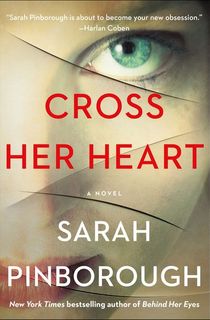
Cross Her Heart is more psychological in how it examines Lisa’s life. She’s a single mother hiding from a dark childhood past. When her 16-year-old daughter, Ava, rescues a drowning boy and makes the local news, Lisa's hidden identity is exposed, threatening their lives as a vengeful figure from her past resurfaces.
“Lisa was in prison for murdering someone when she was eleven—an awful murder—but now she’s been living on a life licence, as we call it here (she is given a set of rules she has to adhere to forever) under a new name for her own safety,” noted Pinborough.
Pinborough enjoys her new chosen genre because “I think for female characters in suspense and thriller, secrets are far more important than in horror.”
“So most female characters in suspense/thriller are harboring a secret they don’t want anyone to know, and in Cross Her Heart all the main characters—Lisa, Marilyn and Ava—are hiding things from each other, but Lisa is the one with the big, dangerous secret.
Alongside the redemption arc, adult female dynamics play a pivotal role in the plot, much like they did in 13 Minutes for her teenage characters.
“It’s a book about best friends,” said Pinborough. “Basically, Lisa’s present-day ‘healthy’ best friend has to help her save her daughter from her childhood ‘very unhealthy’ best friend. That type of strong dynamic between female forces doesn’t happen as often in horror."
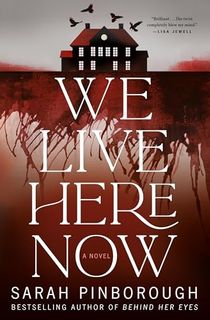
We Live Here Now: A Novel
We Live Here Now is Pinborough’s Poe-inspired gothic horror thriller set in a Dartmoor country house called Larkin Lodge. Primary character Emily moves there from London with her husband Freddie to recuperate after an accident that nearly kills her.
Emily feels a terrible presence in a third-floor room, but her husband doesn’t seem to notice the murmurings that linger from the house after a suspected murder. One of the best parts of the book is a raven character that continually visits Emily.
“I voice the raven in the audiobook, which made me laugh when they asked me because I have a voice like Mickey Mouse on helium, so I had to really concentrate on talking slower and more seriously,” said Pinborough. “The raven was actually an addition in the second draft when I decided I wanted a creepier opening than I had.”
As Pinborough started writing the male raven character, and his two female mates, Bright Wing and Broken Wing, she realized that the birds were “good parallels for what was going on inside the house.”
The Poe-style birds also doled out clues along the way. Since the COVID pandemic, the author also found a love for corvids (crow family) and magpies.

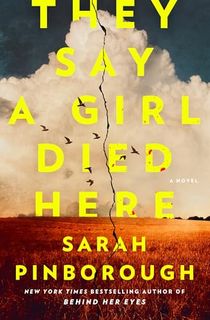
They Say a Girl Died Here: A Novel
They Say a Girl Died Here was originally a horror novella instead of a crime thriller and only the setup was the same. Pinborough really saw the novella as a “launchpad” for the novel versus a reworking of the original. The intergenerational characters, the journey they go on together, and the ending are completely different. Pinborough kept the dry drought in the American heartland landscape for both versions of the bleak story.
“Perhaps I have dug deeper into Anna’s trauma that she brings with her when she moves to Harper’s Creek, and examined it more, and that’s fed into her reactions in certain situations,” admitted Pinborough over our email exchange. The mother character, Claire, has far more to say in novel length since the author is ten years older and her “sympathy with exhausted women is much stronger.”
There’s a scene with the grandmother where the title of the book is first conveyed that will surely send shivers down some spines. For Pinborough, she was excited to again turn over memory storytelling as a concept through a character.
“I am so fascinated by memory, and how we trust it so much and yet it’s entirely unreliable in that we only ever remember the last time we remembered something,” said Pinborough. “So it’s like a carbon copy getting thinner and changing with each recall. Also, if you were in a bad mood when you remembered something, then the next time you think about it it’s more likely to have some negativity attached to it. So weird.”
She recalls trying to focus during bedtime after her father died and she could only pull certain threads of memory or specific events from the past. A similar thing happened when trying to grasp certain events from her school years.
“I mean, I’m in my mid-fifties, and I still struggle to take it on board,” said Pinborough.
“That’s maybe a bit off topic, but They Say is a book about four women—well, three women and a child—all living together in different stages of life, and how they have so much tension between them whilst still loving each other. It’s tricky. Again, I’ve circled back to mothers and daughters; it seems!”
Feature Image: The Contex Conversation


