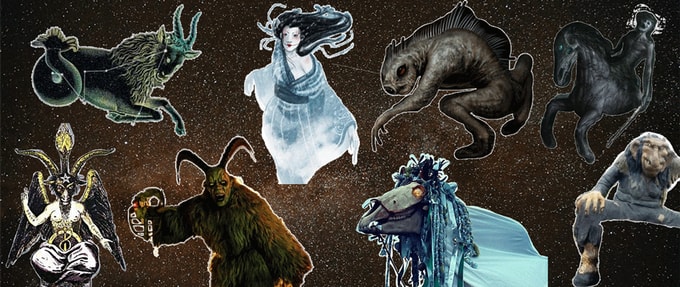
The winter solstice has passed, and although the days are getting lighter, the nights still feel long, the world is quiet after the holidays, and the sun still feels distant. Across different cultures, this liminal timeline has inspired unsettling folklore; monsters and creatures that lurk in deep waters, forests, and have an appetite for punishment.
Capricorn is the tenth sign of the Zodiac, and the third earth sign, with its name coming from the Constellation ‘Capricornus’, meaning ‘horned goat’ in Latin, but Capricorn isn’t simply a goat.
Since the days of the Babylonians, some 400 years ago, Capricorn has been depicted as a Sea-Goat - a mythical creature, half goat, half fish. This strange hybrid reflects the Capricorn's core contradictions: land and sea, ambition and isolation, discipline and emotional currents.
Astrologically, the Capricorn is often described through two opposing archetypes; one side is linked to Pan and Amalthea, the wild satyr God, and nurturing goat nymph, that represents freedom, instinct, and a longing for adventure. The opposite side links back to Cronus, Zeus’s tyrannical father, and Hestia, the goddess of the hearth, who represent forces of control, sacrifice, and perfectionism.
Capricorn lives between the extremes, and folklore has filled that space with creatures that embody its deeper, darker shadows.
Here are eight creepy mythical beings that feel perfectly at home in Capricorn season, with each reflecting a chilling aspect of the Sea-Goat’s nature.
The Nuckelavee, Scotland
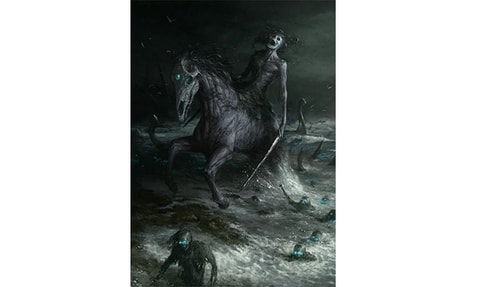
 Photo Credit: Flo's History
There are few creatures that embody Capricorn and its darker potential, but the Nuckelavee, with its skinless form resembles a flayed horse with a huge human torso fused into its back, with its veins and sinew exposed. The creature dwells in the sea, but roams the land in winter — it brings disease, drought, and decay.
The Nuckelavee, like Capricorn, straddles two worlds: the land and the ocean… but without harmony. It represents what happens when endurance turns to bitterness, and isolation curdles itself into cruelty — a Sea-Goat stripped of its restraint that becomes terrifying.
Krampus, Germany
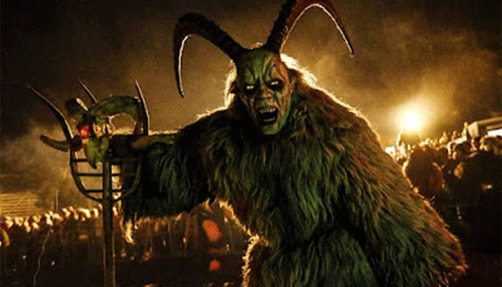 Photo Credit: Brandon The Grey
Krampus is perhaps one of the most recognizable Capricorn-equest monsters — half goat, half demon, Krampus roams the winter nights, preying on naughty children, whipping them with chains, kidnapping them, and devouring them; where Santa rewards, Krampus disciplines.
The Krampus creature channels the Capricorn's authoritarian side, the enforcer of morals and consequences — Krampus does not care about excuses, only the results. In folklore, the creature doesn’t arrive to comfort, like his cheerful bellied counterpart, but to remind that actions have weight.
The Sea-Goat, Greece
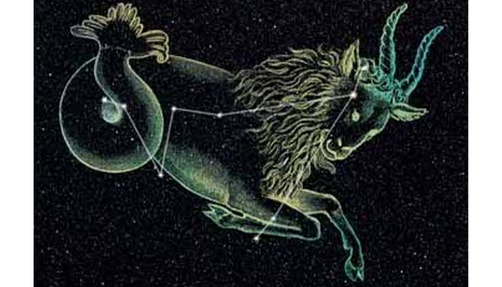 Photo Credit: John P Pratt
Not commonly known, but the zodiac symbol has its own unsettling myths. One of its lesser known figures, Pricus, was the immortal father of all Sea-Goats; he possessed control over time, and helplessly watched as his children crawled their way onto the land, losing their intelligence, and returning to feral goats. Pricus, left alone after all his children left the water, begged the Gods for death.
The Sea-Goat is Capricorn at its most tragic, the burden of responsibility, loneliness, and the grief of watching others move away from them. In darker depictions, the Sea-Goat morphs into an abyssal creature with barnacle-encrusted eyes, lurking where the light cannot reach.
Grýla, Iceland
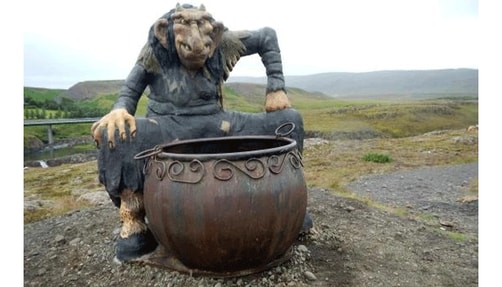 Photo Credit: Christmas Wiki
If the end of Capricorn season had a final boss, it would be the Grýla.
A Grýla is an ancient ogress who lives in the frozen mountainous land of Iceland; during the winter solstice, she descends her rocky, snowy home to hunt for naughty children to stew in her cauldron. The Gryla is enormous, horned, hoofed, and has 15 tails.
The Grýla isn’t just a monster, she is the winter: hungry, scarce, and in survival mode; she reflects the Capricorns' association with endurance, often under harsh conditions, and the fear that failure has consequences that no one can save them from.
Mari Lwyd, Wales
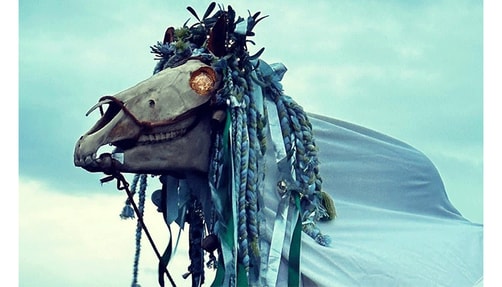 Photo Credit: Nation CYMRU
A strange and unsettling creature, the Mari Lwyd is an unsettling winter visitor with a horse skull mounted on a pole, draped in white sheets. During the darkest of the winter nights, it travels from door to door challenging the occupants to a battle of rhyme and wit - lose, and it enters your home to devour all your food and drink.
This skeletal creature reflects the Capricorns ‘trials by merit’ philosophy, and understands that survival isn’t free, it is something you must earn; Mari Lwyd turns hospitality into a test, do you deserve to have it? Echoing the Capricorn's belief that nothing gained should come without effort.
Yuki-Onna, Japan
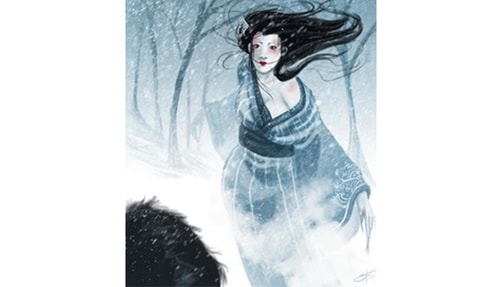 Photo Credit: Yokai Fandom
Yuki-Onna is a snow woman who appears during blizzards. Pale but beautiful, her breath freezes travellers where they stand - she is quiet and still, but also lethal.
The Snow Woman embodies the coldness often associated with the Capricorn, due to their emotional reserve, self-control, and how they distance themselves, which is often mistaken for cruelty, as opposed to the fear of emotional damage.
Just like the winter, the Yuki-Onna doesn’t chase her victims; she waits for them.
The Chupacabra, Mexico
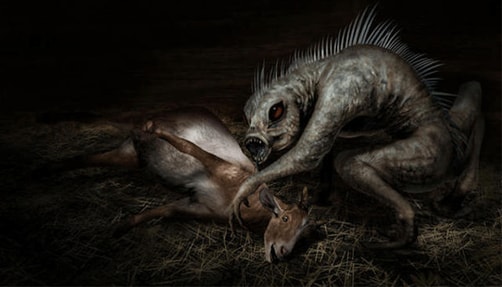 Photo Credit: The Mexican Labyrinth
The Chupacabra slips through the night, draining the blood of the thing it hunts: goats. Leaving a demonic fear in its wake, the Chupacabra represents the Capricorn's shadow, and is defined by its prey — it is a predator stalking its own symbol.
Although depictions of the creature vary, it is typically described as a large, hairless creature that stands on its hind legs, with a row of spikes running down its spine.
The “goat-sucker” as it is also known, feeds in silence, and its ambition is stripped of any conscience. Where the Capricorn strives to build and protect, the Chupacabra has desire without structure.
Baphoment, Occult Lore
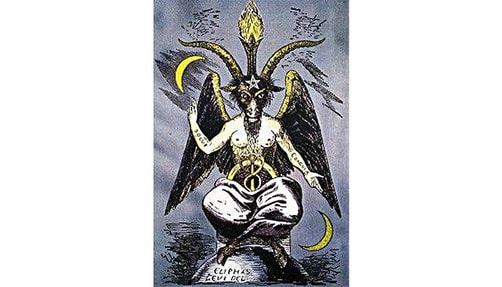 Photo Credit: Villains Wiki
 The Baphomet represents the Capricorn's ultimate duality: material mastery and spiritual depth, along with light and shadow, and restraint and rebellion. It is the goat creature that understands the pull of heaven and hell, but walks between them willingly.
It is associated with the Devil card in Tarot, Capricorn's ruling card, Baphomet, is the Sabbatic Goat — a goat-like, horned head with wings, goat legs, and a crown of flames. Its image has become synonymous with forbidden wisdom and transgression, symbolizing balance and hidden knowledge.
Capricorn season isn’t just about ambition and discipline, it is about driving the darkness, the cold, and the ravaging landscape of winter. These mythical creatures remind us that they don’t fear the shadows of winter; they thrive in them.
And the Capricorn knows, more than the other signs, that the shadows are where true strength is forged.
Featured image: Clay Banks / Unsplash


