In mainstream media, depictions of motherhood are dominated by one of a few common stereotypes: the sainted mother who graciously sacrifices her own needs for her family, the mentally ill postpartum woman on the verge of tearing her life apart, and the twisted, malevolent abuser.
Due to patriarchal social expectations, there is also tremendous pressure for women to perform the role of a “good mother” in their real lives. As a result, people who are not mothers rarely get to see actual motherhood in all its raw, messy truth.
Real mothers' experiences of motherhood do not often fit into such neat categories.
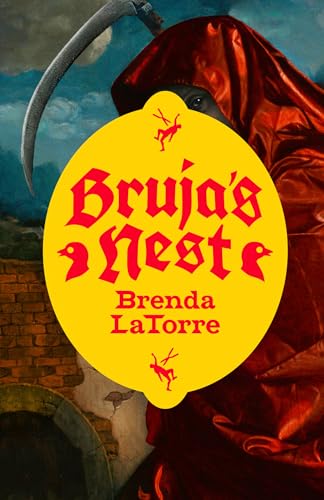
Brenda LaTorre, author of the upcoming Mexican folk horror novel Bruja’s Nest, explained to The Lineup how, when she became a mother herself, she was “granted a free pass into this secret club of mothers. People start to confess their secrets… how tired they are, how they hate this aspect or that aspect of motherhood. And that’s when I realized, through my own experience and what other women were telling me, that motherhood was much more nuanced than I anticipated.”
One aspect of motherhood LaTorre explores in the novel is the differences in Mexican culture between mothering a daughter and mothering a son. The idea to explore this came as she was drafting her main character, Yolanda’s, pregnancy.
“It was obvious she’d prefer to have a son instead of a daughter. Sons carry the family’s lineage, so they’re seen as more important,” said LaTorre.
As she thought more on this, she ruminated on how “in some contexts, daughters have to be perfect, and sons don’t. Sons are forgiven easier for their wrongs, while daughters mustn’t have sexual desire, and they must study, and then become good wives and mothers.”
At no point in the novel is this clearer than with Yolanda’s own mother, who punishes Yolanda for experiencing sexual abuse at the hands of her brother by forcing her out of the family home to work as a servant at a grand hacienda in a rural area.
Even this, though, is not motivated by abject cruelty: Yolanda’s mother expresses frustration at Yolanda’s lack of direction and sense of entitlement, and is attempting to reroute what her patriarchal lens sees as a dangerous path for her daughter.
This misguided sense of care, even as she harms her daughter out of preference for her son, keeps her from lining up with most stereotypical presentations of abusive mothers.
Later, after experiencing her own pregnancy and giving birth to a monstrous son, Yolanda’s character is dramatically altered by motherhood.
At the beginning of the novel, LaTorre said that Yolanda is a self-obsessed, flippant character who “thinks she knows everything about life and that it’s so easy.”
Yolanda plans to become pregnant by one of the sons of the wealthy family who own the hacienda, viewing motherhood as an opportunity to climb the social ladder. LaTorre says, “the responsibilities that having a child entails never cross her mind.”
LaTorre went on to describe, though, how motherhood is transformative, saying, “Your body suffers the first transformation, and then your mind shifts too. After Yolanda becomes a mother, she starts to care about others, without giving up her dreams of breaking the cycle of poverty.”
Even though her child is grotesque and violent, permanently scarring her body in his pursuit to drink blood and consume flesh, Yolanda realizes, according to LaTorre, that “if she doesn’t protect him, no one will. At this realization Yolanda embraces her son and decides her dream can expand to him. She can dream of a better life for both of them.”
The most unexpected aspect of motherhood LaTorre addresses in Bruja’s Nest is the inclusion of infertility. When asked why she included an infertile character, Odette, in a novel where themes of motherhood are so pronounced, LaTorre empathetically explained, “I think people with fertility issues see themselves as mothers too. I think they have this imagined motherhood in their minds.”
Odette is a flawed character who is often malicious toward Yolanda, and yet the reader is left with a feeling of tenderness toward her as they learn of her many miscarriages and the dismissive attitudes her family and husband hold toward her due, at least in part, to her infertility.
This inclusion was important to LaTorre, who explained how “losing a child scars you and also makes you a mother in some way.” She has personal experience with this, and described how, after a pregnancy loss, she still “thought of myself as a mom, even before my first child was born.”
Ultimately, Bruja’s Nest uses Mexican folk horror as a vehicle to explore many underrepresented facets of motherhood.
As LaTorre summarized, “Yolanda’s mother lives in poverty and resentment. She is an enabler of the patriarchy. Yolanda has a monstrous child but loves him. She saw the child as a means to an end but ended up realizing what the responsibility of motherhood entailed. Odette is a mother who had miscarriages and never got to raise a child. She idealizes maternity without knowing the real cost of it.”
These mothers are more complex and diverse in their motivations and choices than is portrayed in the usual patriarchal stereotypes. Even though they are not necessarily aspirational or even healthy models of motherhood, LaTorre explained, “they’re more human.”
Bruja's Nest hits shelves October 6th—pre-order it now!