
Horror is an interesting genre. In a very cyclical way, it is sometimes very ahead of the curve and sometimes so very far behind it.
For example, for decades, horror was a genre that, across many major films, exploited women’s bodies in both sexual and sadistic respects. On the other hand, in more recent years, horror is the genre that has made the biggest strides in restoring women’s autonomy on screen, giving them complexity enough to be the heroine or the villain or whatever comes in between, and granting them catharsis and strength separate from a Madonna-Whore complex.
While horror built a reputation for discarding people of color so frequently, The Black Guy Dies First became a notable trope; it has also, through the work of films like Get Out and Sinners, started in-depth conversations about race, racial trauma, and the layers of identity that unfold between us.
And so, too, has there been a Gay Awakening. But let’s not forget that, even if it may have lost its way somewhere in the middle, horror also started out pretty gay in the first place.
I’ve already spoken about the history of queer horror cinema, so I’ll do my best not to retread ground there. But rather than looking back on the what, I wanted to take a beat to reflect on the why.
Why does the LGBTQ+ community gravitate toward horror?
The Monstrous Outcasts
One of my favorite things to talk about is lycanthropy as a metaphor for homosexuality. I could probably write a full-length article on that topic alone.
But I’ll summarize, since that’s not really what you came for.
Werewolves are the ultimate outsiders. Most of the time, they walk through life normally, and few people can tell what they are just by looking at them.
But there always comes a time when they can’t conceal their true nature. Whether a transformation is forced upon them or they must confess their condition to their loved ones, it mirrors the “coming out” scenes so many queer people have lived through.
Being a werewolf comes with uncontrollable urges—carnal urges those afflicted with the curse are often ashamed of. Plus, there’s a desire to be cured, which can reflect the viewpoint of perceiving heterosexuality as the norm or the ravages of the HIV/AIDS epidemic.
For their own safety, werewolves tend to hide themselves (in closets or otherwise). And werewolf packs are not dissimilar from the tight-knit communities built beneath the LGBTQ+ umbrella.
Queer people have always had a lot of empathy for the monsters in horror movies. These monsters are the ultimate outcasts, oftentimes reviled for reasons beyond their control, and frequently misunderstood.
Frankenstein has been abandoned by his creator? How many times were queer kids disowned by unaccepting families?
Vampires are considered evil just because of what they need to do to survive. How many times has the queer community been treated as predators just because people don’t like who it is they desire?
The struggles of the things that go bump in the night are very familiar to LGBTQ+ individuals. The community has been villainized, hunted, and shamed into hiding for decades.
The Wonderful World of Camp
Camp is an aesthetic that embraces all things over the top. It’s all about tongue-in-cheek theatricality and exaggeration that comes from irony.
Bad taste is the point, and it’s all done with a wink.
The queer community originated the camp aesthetic using it as a means to subtly signal their inclinations, and as the subculture grew, as a means to make social commentary, a way to reclaim their narratives, and as a vehicle of protest.
Today, the mainstream has embraced camp, especially in the cinematic world. But horror was camp long before it was “cool.”
While some horror certainly goes the high brow route, horror was born from gushing blood and low budgets. B-horror is the backbone of the genre.
In horror’s early days, it certainly went the way of naive—or unintentional—camp. In a 1959 William Castle favorite, The Tingler (which feels campy from the name alone), the wires controlling the fearsome monster are visible through much of the film, lending to a very self-aware horror and a humor that’s not present in the story.
In 80s cult classics like The Evil Dead and Killer Klowns from Outer Space, the camp becomes intentional. Budgetary restrictions are still very much obvious, but it's an avenue for creativity and humor rather than something to hope audiences don’t notice.
In films like M3GAN, the camp is present as an open call to queer audiences. Rocky Horror Picture Show and Jennifer’s Body, despite being released nearly 35 years apart, deliver the same queer camp with queer stories for queer audiences.
In these cases, horror serves as a vehicle for joy for the LGBTQ+ community.
In so much of life, the queer community has had to push through by laughing through the worst of it. Now they’ve been gifted a little bit of laughter while blood splatters in the background.
Subtext and Freedom from Censorship
Throughout much of cinematic history and, if we’re honest, even in a lot of media now, the queer community has had to rely on subtext to find any representation.
But trust me, the subtext has been there in the horror genre. And oftentimes it’s so queer it’s practically text.
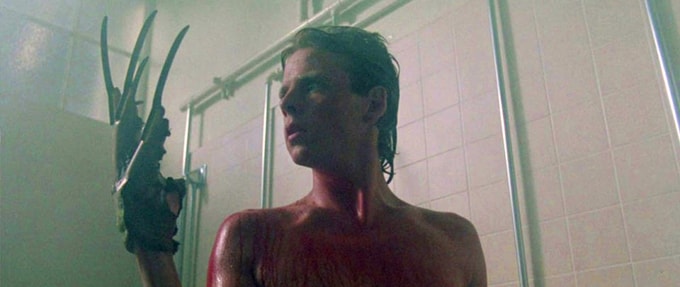
The Bride of Frankenstein, directed by openly gay filmmaker James Whale, is a masterclass in the subtext of gay ostracization. 1985’s A Nightmare on Elm Street is a big neon sign pointing to homosexual repression, and is often lovingly referred to as the gayest slasher of all time.
The queerness pulsating throughout the entirety of the Hellraiser franchise is so rife you don’t even have to squint to see it.
Billy and Stu may not be explicitly gay in Scream, but the openly gay screenwriter of the film based them on a real-life murderous gay couple, and their actors are more than happy to celebrate the queer narrative on the convention circuit.
But as important as what horror movies have been pointedly not saying is, it’s just as important to acknowledge what horror has been unafraid to say.
That is, horror has always been a genre unafraid to test the limits. Sex, violence, gore, profanity—it’s a checklist of things typically deemed inappropriate for public consumption.
With that in mind, it stands to reason that the people who gravitate towards horror have more of an open mind and a higher acceptance of the “unusual.” In short, the horror community is not afraid to let everyone’s freak flag fly, whatever that may mean.
I think no one would be surprised to see heavy overlap in those who go on moral quests against queerness and those who claim horror films are poisoning our youth. So, while not a foolproof method, slashers are a pretty good way of weeding out at least the first round of hate-mongers.
In a genre built on nonconformity, its audience is free to be themselves.


