Fans of weird and wild cinema are probably very familiar with Hong Kong’s notorious Category III rating, the highest rating available under the Hong Kong motion picture rating system.
Roughly equivalent to an American NC-17 or X, the Cat III rating, as it is known, means that, “No persons younger than 18 years of age are permitted to rent, purchase, or watch this film in the cinema.”
Because the original Hong Kong motion picture rating system had only three levels (sub-levels were added after 1995), the Cat III rating was applied more broadly than NC-17 or X ever were here in the States, and Hong Kong filmmakers took advantage to create some legendary exploitation films that have become infamous among aficionados of outré cinema.
Among these, one of the most notorious is The Untold Story, a 1993 film starring Anthony Wong, who won best actor at the Hong Kong Film Awards for his role.
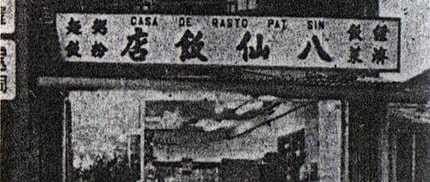
Among the many reasons for The Untold Story’s notoriety is the fact that the grisly and depraved film was based on actual events – the gruesome murder of an entire family at the Eight Immortals Restaurant in what was then Portuguese Macau.
What happened at the Eight Immortals Restaurant?
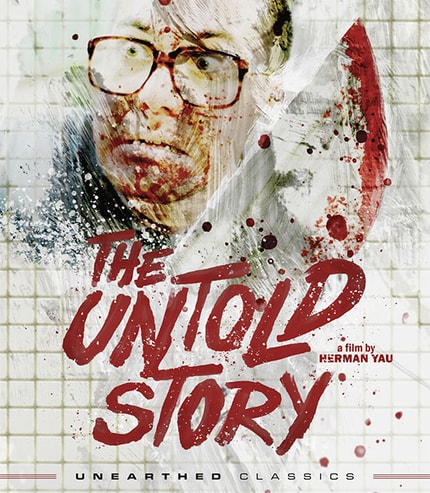

The Untold Story Blu-Ray Cover
Photo Credit: unearthedfilms.comA Chinese eatery attached to the Eight Immortals Hotel, the restaurant belonged to Zheng Lin and his family, who also operated it. Though they apparently made a modest profit, Zheng and his wife were allegedly heavily involved in the city’s gambling scene. That’s where they met Huang Zhiheng.
According to Huang, Zheng and his wife lost some 180,000 patacas, equivalent to around $20,000 US, in a series of high-stakes bets. Unable to pay up, they agreed to give Huang the mortgage to the Eight Immortals Restaurant if they were unable to pay off their debt within a year. On August 4, 1985, Huang returned to collect what he was owed.
The restaurant was closed for the night. According to Huang, he demanded only what was coming to him — that the family either give him the deed to the restaurant, or pay at least some portion of their debt. When Zheng Lin refused, tensions escalated, reaching a boiling point when Huang took Zheng’s son, Antonio Zheng Guande, aged seven, hostage with a broken bottle.
With the bottle to Antonio’s throat, Huang forced the other family members to bind and gag one another. When one broke free and began to scream, he stabbed her in the throat with the bottle, and the bloodbath began.
Did Huang Zhiheng bake his victims into pork buns?
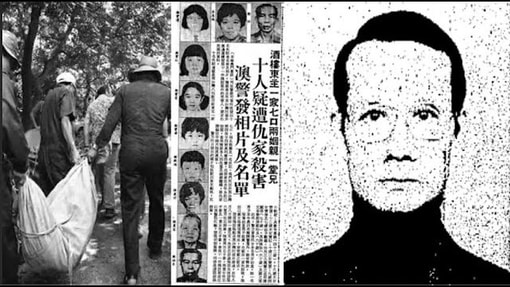
Newspaper Photos: The Eight Immortals Restaurant Massacre
Photo Credit: Mostly SciFi Podast-Youtube.comOver the course of a few minutes, Huang Zhiheng slew all nine members of the Zheng family, either by strangulation or with the broken bottle. This included Zheng and his wife, their four daughters, aged between nine and eighteen, their only son, aged seven, Zheng’s mother-in-law, and two other, more distant relatives. At one point, Huang even left the restaurant to lure one of Zheng’s relations inside, where he killed her, too.
In all, ten people died that night in the Eight Immortals Restaurant, and Huang Zhiheng spent some eight hours dismembering the bodies, which he wrapped in garbage bags and disposed of either in the ocean or in dumpsters throughout the city. Huang’s method of getting rid of the bodies meant that they were found only piecemeal, and some parts were never recovered.
This, plus the fact that Huang continued to run the restaurant after the murders of the Zheng family, led to an urban legend (one heavily exploited in The Untold Story, which was also released as The Human Pork Bun) that Huang baked his victims into pork buns and sold them at the restaurant. There is no actual evidence to support this story, however.
Huang did reopen the Eight Immortals Restaurant, and continued to operate it for some time after slaying its owners. It was not until more than a year after the murders that Huang was finally arrested, when numerous body parts found on beaches throughout the area were connected with the missing Zheng family.
What else did Huang Zhiheng do?
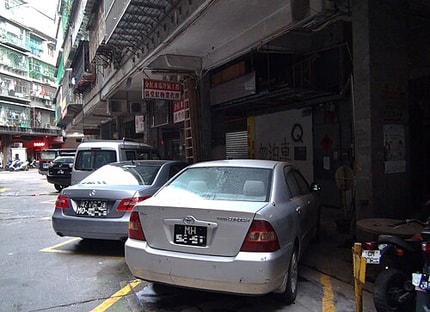
The former Eight Immortals Restaurant in 2015.
Photo Credit: WikiPediaHuang lived in the Zheng family home and ran the restaurant after the murders, telling anyone who enquired that the family had taken a trip to the mainland. He had the restaurant’s ownership documents, which he had taken from Zheng’s safe, and was known to associate with the family, so while the setup seemed dubious, there was no compelling reason to question it… at least, at first.
As more and more body parts were recovered from area beaches, however, and it became apparent that they were from multiple victims, across an array of ages, Macau police became suspicious. In September of 1985, Huang attempted to flee the encroaching police net, but was captured and, by October 2, convicted of ten counts of murder.
In prison, Huang made two suicide attempts, the second of which was fatal. Using a sharpened bottle cap, he cut his wrists, leaving behind a suicide note which, allegedly, made it clear that he was not taking his own life out of guilt for his crimes.
Even that was not the end of his bizarre story, however. After his death, Huang was linked to another murder, this one having taken place in Hong Kong’s Quarry Bay in 1973. As with the murders of the Zheng family, this killing was allegedly over a debt. In order to avoid discovery, Huang is reported to have cut off the tip of his index finger and burned his finger prints— what was left of his fingerprints are what linked him to the murder after his death.
The restaurant was closed by the police, and the recovered remains of the Zheng family were cremated and scattered by relatives. The tragedy at the Eight Immortals Restaurant became an urban legend that haunted Hong Kong — and eventually a notorious film.


