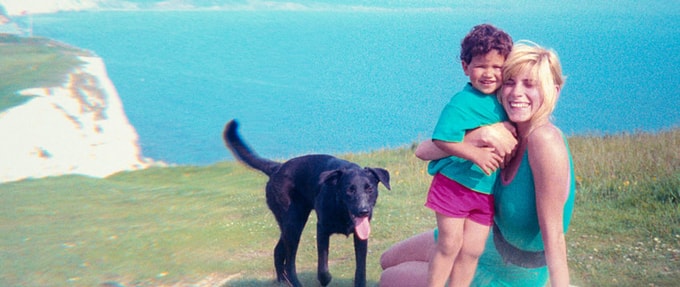
In 1992, two-year-old Alex Hanscombe became one of the youngest witnesses ever questioned by the London Metropolitan Police. Three weeks earlier, he had been walking with his mother, Rachel Nickell, and their dog Molly through a secluded part of London’s Wimbledon Common.
“We saw a stranger who was lurching toward us and he had a black bag over his shoulder,” a grown-up Alex later told newspapers. “Then I was grabbed and thrown to the ground, my face dragged across the mud. A few seconds later my mother collapsed beside me.”
23-year-old Rachel Nickell was stabbed 49 times in the neck and chest and sexually assaulted, all in front of her two-year-old son. “It was a frenzied attack but like a silent movie,” Alex later said. Afterward, the killer “just disappeared off into the distance like a ghost.”
Young Alex was found clutching his mother’s body and repeating the words, “Get up, Mummy.” He had placed a piece of paper on her forehead as a “makeshift bandage in the hopes of fixing his mother.”
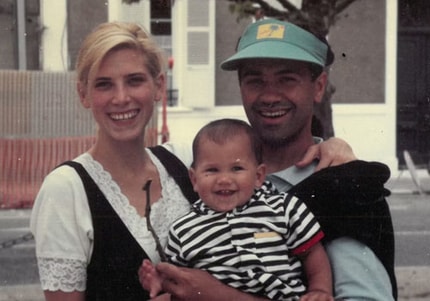

Rachel Nickell with partner André Hanscombe and son Alex.
Photo Credit: TV ChoiceDid Colin Stagg Kill Rachel Nickell?
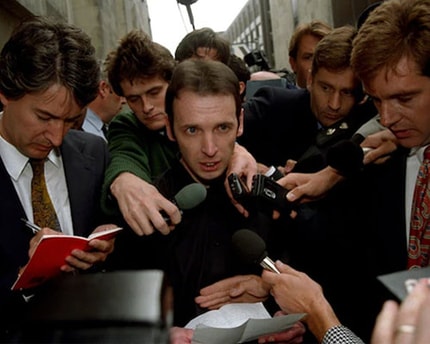
Colin Stagg issues a statement to the media.
Photo Credit: The TelegraphBecause the only witness was so young, it took the police three weeks to question Alex about what he saw that morning. “The police told us from day one they were in a terrible position,” Andre Hanscombe, Nickell’s partner and Alex’s father, later said, “they didn’t have anything. They didn’t have anything. They were given no cards to play and Alex had the whole scene in his head.”
Under mounting public pressure, the London Metropolitan Police questioned some 32 potential suspects, eventually focusing on Colin Stagg, a man from nearby Roehampton who sometimes walked his dog in the Common. With no evidence to link Stagg to the scene, authorities concocted “Operation Edzell,” a sting involving an undercover policewoman who feigned a romantic interest in Stagg to try to get him to incriminate himself.
In a taped conversation, the undercover officer said that she enjoyed hurting people and tried to get Stagg to say the same.
“If only you had done the Wimbledon Common murder,” she said, “if only you had killed her, it would be all right.” Stagg, who one reporter described as a “bewildered weakling rather than a psychopath,” replied, “I’m terribly sorry, but I haven’t.”
Nonetheless, police pressed Stagg’s case to court, where the judge accused them of “deceptive conduct of the grossest kind.” Stagg was acquitted, and was eventually awarded damages totaling more than £700,000, though not until 2008, more than a decade after his acquittal.
Who Killed Rachel Nichol?
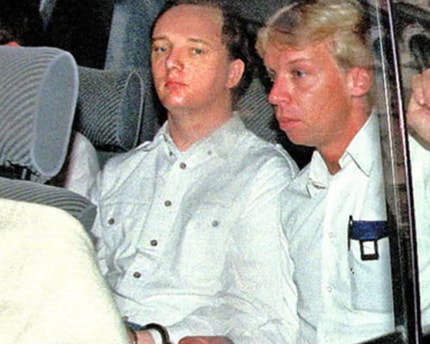
Robert Napper (left) is driven away in 1995 after being detained indefinitely for the murder of Samantha Bissett, 28, and her daughter Jazmine, aged four.
Photo Credit: The GuardianAt the same time that Colin Stagg was sitting in police custody, 27-year-old Samantha Bisset was stabbed to death in her flat in Plumstead in November of 1993. The attacker then sexually assaulted and smothered her four-year-old daughter Jazmine. “Such was the brutality of [the attack] that the police photographer who recorded the scene was off sick for two years,” according to reporting from the Independent.
The crime was eventually laid at the feet of Robert Napper. At the time of the Bisset murders, the police had already been alerted to Napper – by none other than his own mother, who had called saying that Napper had confessed to her that he had raped a woman near Plumstead Common.
Napper would eventually confess to the Bisset murders and several other attacks, and he is believed to have been responsible for a string of rapes that took place along Green Chain Walk over the course of four years. In all, Napper may have raped more than seventy women, most of them after his mother’s phone call, which police initially rejected because its specifics did not match any reported crime on file.
Detective Sergeant Alan Jackaman, who handled the Bisset case, allegedly also identified Napper as a suspect in the murder of Rachel Nickell, but was rejected by the police handling that investigation, who believed they already had their man in the form of Colin Stagg.
It was not until 2004 that advances in DNA profiling officially linked Napper to the case. In December of 2008 he was convicted of killing Rachel Nickell, the charge downgraded to manslaughter due to “diminished responsibility.”
At the time, Napper was already serving a sentence at Broadmoor Hospital, the oldest high-security psychiatric unit in England. Following his additional conviction for the killing of Rachel Nickell, Napper was sentenced to “indefinite detention.”
The presiding judge stated that, “You are in any view a very dangerous man.”
Rachel Nickell Documentary Netflix
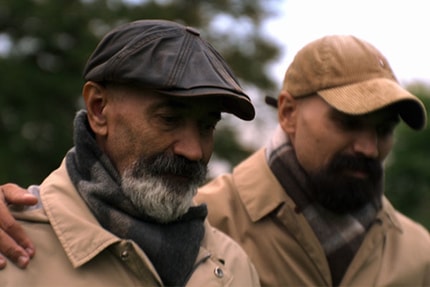
Andre Hanscombe and his son Alex Hanscombe today.
Photo Credit: The National NewsAndre Hanscombe and his young son were “hounded by the press and subjected to racial abuse” following the tragedy, while Rachel Nickell’s killer was still at large. Andre took his son overseas, first to France and then to Spain, “in an attempt to escape the attention.”
As the furor died down, however, each of them tried to wrestle with the horror of their past in various ways. Andre Hanscombe wrote a 1996 book about his life with Nickell and how his life changed after her murder, while a grown-up Alex penned a 2017 memoir called Letting Go: A True Story of Murder, Loss & Survival.
More recently, they both worked on the Netflix documentary The Murder of Rachel Nickell, as well as the dramatization series The Witness, where they served as consultants. (The wave of coverage of the murder also includes a two-part Prime Video docuseries called The Wimbledon Killer.)
Of course, they weren’t the only victims affected by the collateral damage surrounding Rachel Nickell’s murder. Several other people involved in the case also wrote books, including Detective Sergeant Jackaman, while Colin Stagg appeared in the 2023 documentary The Murder That Changed Britain.
The undercover officer involved in “Operation Edzell” also sued the Metropolitan Police for their treatment of her, alleging that her involvement in the case had ruined her career. In 2021, the ill-fated undercover sting operation was dramatized in a Channel 4 miniseries aptly named Deceit, where BAFTA Award-nominated actress Niamh Algar played the undercover officer, codenamed “Lizzie James.”


