(6).png?w=3840 "7 Horror Books Set on the Internet")
The Internet is maybe the greatest thing to ever happen to my life, and also probably the worst. I was born in the early nineties and started getting really online by the mid-aughts.
Anonymous chatrooms, message boards, Flash games, DIY blogs. I was in heaven. What felt like pure escapism eventually merged with reality and became part of everyday life—which, in retrospect, triggered its downfall.
The Internet mostly sucks now. Websites are barely a thing, outside of nightmarishly infinite newsfeeds. Everything is an ad or a sponsored post pretending not to be an ad. Algorithms have infiltrated our brains and regurgitated everything we’ve once loved into some capitalist pigslop.
Anyway, if you feel the same and also love horror books, here’s an article about some stuff you’ll find interesting. Buy these books and read them and leave reviews and…I don’t know, do the opposite of touch grass.
Never log off. Stay online forever. You live in my phone now, and you can never leave. So you might as well read some books while you’re here.
Here are seven books set on the Internet to terrify you.

Things Have Gotten Worse Since We Last Spoke
If you’re a fan of indie extreme horror, you’ve surely heard of Eric LaRocca, and if you’ve heard of Eric LaRocca, it’s probably because of their novella Things Have Gotten Worse Since We Last Spoke. Originally published as a standalone by Weirdpunk Press, it went viral on Bookstagram and Booktok soon after its release thanks to a sick-as-hell front cover, a great premise, and general word of mouth.
I actually blurbed the original release with the following: "Part Dennis Cooper's The Sluts, part David Cronenberg's The Brood...Eric LaRocca's Things Have Gotten Worse Since We Last Spoke is a masterpiece of epistolary body horror.” I stand by that statement!
It’s a perfect example of chatroom horror done correctly. The novella was later reprinted through a bigger company as the title novella in LaRocca’s debut story collection.

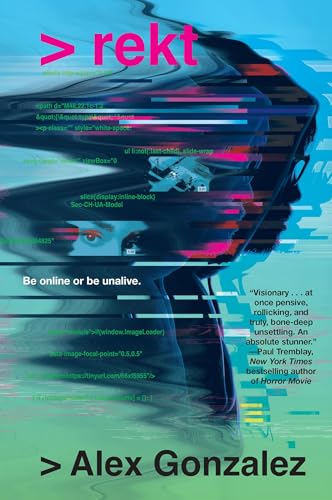
rekt
The writing in rekt is mostly straightforward prose with less of a focus on the epistolary format that tends to thrive with Internet-based horror. This is an patient, depressing exploration of grief via the sleazy underbelly of shock videos.
What really makes rekt unique is its premise: yes, it’s about gore and death videos, but…some of these videos happen to feature victims who are somehow still alive. Are they predicting the future? Who the hell is making these things?
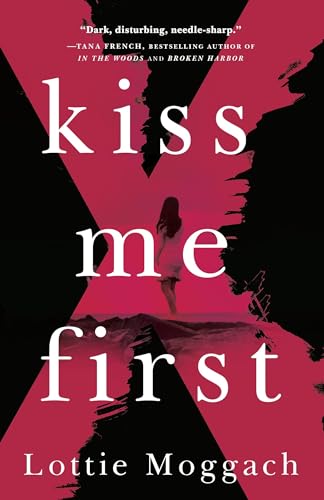
Kiss Me First
Who amongst us has never discovered a new, exciting Internet forum only to later find out the mod is a complete fucking psychopath? It’s almost a badge of honor for those of us who grew up with message boards.
However, I would wager that most of us weren’t groomed by mods into stealing the identity of another member who recently died by suicide. I mean, surely there are some of us out there who can relate to the protagonist of Lottie Moggach’s Kiss Me First, but…I hope not too many.
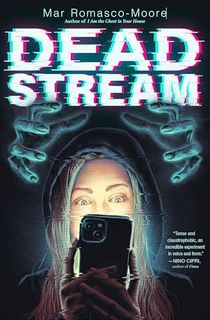
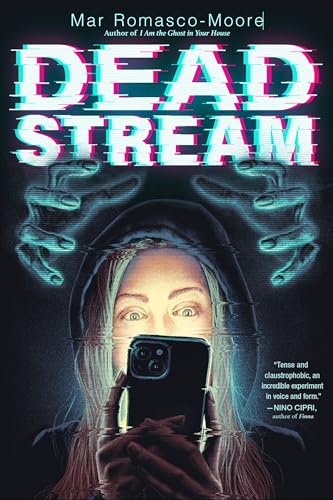
Deadstream
One of the few entries in this list marketed to younger readers. Deadstream is a YA thriller pitched as Real Window meets The Ring.
Considering the book’s title, it should come as no surprise that the story’s content deals with livestreams—particularly someone’s livestreamed murder…by a supernatural entity, which soon starts haunting other streamers…

We Had to Remove This Post
This one complements the recent Faces of Death reboot/sequel (whatever the hell you’d call it), because it focuses on a team of social media content moderators who find themselves subjected to some of the worst material imaginable.
I’ve often wondered how people in this profession manage to, like, cope with all the crazy shit they have to look at every day. I wouldn’t last a day with a job like this, and We Had to Remove This Post does an excellent job explaining why.


The Sluts
I owned a bookstore for three years and, no joke, I’ve probably hand-sold more copies of Dennis Cooper’s The Sluts than any other title we’ve ever stocked. Consisting mostly of forum excerpts where members leave reviews of sex workers, things quickly spiral after everybody starts writing inconsistent stories about one specific male escort named Brad.
This is one of my favorite books of all time. It’s transgressive as hell and feeds into a part of my brain forever thirsty for people fucking around on the Internet.
The cover also features a nude man from the waist up lighting a cigarette with a match, so it works as a good litmus test based on how strangers react when they see it in the wild (if you don’t think the cover rocks then I simply have no interest in speaking with you about anything, ever).


Amygdalatropolis
B.R. Yeager’s novel Negative Space is sort of an indie horror darling at this point. It’s (rightfully) considered one of the best horror novels to ever be released by a small press. What gets discussed less, however, is the novella Yeager released before Negative Space, which is a sick little thing titled Amygdalatropolis.
This book takes everything I love about The Sluts and reshuffles its guts into the landscape of snuff films and cyber swatting. The protagonist is a shut-in who gradually declines in every possible aspect as he commits to spending all of his time on 4chan.
Fortunately, I never personally visited that terrible website, but I’m familiar enough with it to understand the layout and language. Yeager wisely offers plenty of interludes between the 4chan sections of straightforward prose and also segments of pure hallucinogenic horror that would rival the gnarliest scene in Naked Lunch.
Without these non-epistolary sections, I fear the 4chan speech would have quickly become overwhelming. Because, man, they can be brutal.
I have no idea how people who aren’t chronically online will respond to this book, but the very concept of such a reader cracks me up. Good luck!


