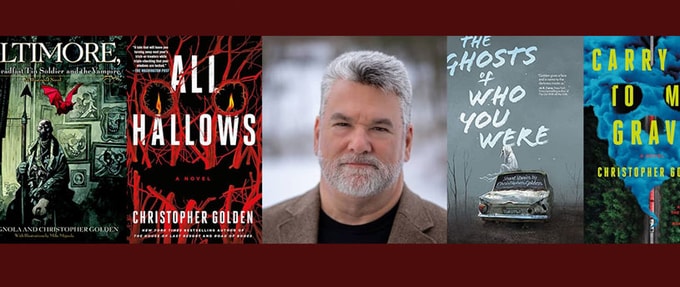

Massachusetts horror and thriller author Christopher Golden is prolific in several forms: novels, screenplays, animation, audio dramas, and comics, and as an editor of horror anthologies. The New York Times bestselling, multi-award-winning storyteller earned the title of “king of the horror-thriller.”
Since graduating from Tufts University in 1989 and releasing his first novel, Of Saints and Shadows, in 1994, he’s published dozens of novels and graphic novels. He also helps burgeoning writers find a similar path.
As the seasons slowly change from summer to fall, we speak to the winner of the Bram Stoker Award, the Shirley Jackson Award, and the Audie Award about his career and some of the most memorable solo and collaborative moments from his catalog so far.
If you haven’t enjoyed a Christopher Golden book before, it’s a perfect time to jump in.
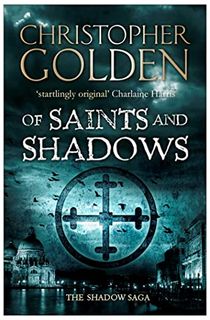
Of Saints and Shadows
Christopher Golden’s first novel started his longtime fascination with vampire tales, and its creation is pretty clear in his mind even 33 years past its original publication.
“You know I grew up in Catholic school for 12 years,” Golden remembers. “I always thought the classic Bram Stoker rules of vampirism were really stupid.”
Golden saw that all the vampire stories were very different from each other around the globe, but pop culture adopted the Stoker ruleset where Dracula could only shapeshift into a wolf, rat, and mist.
“I always thought the idea that a vampire could change itself on a molecular level, but only to that short menu of items, was really dumb,” Golden laughs.
With the vampire story Of Saints and Shadows, Golden set out to explain how foolish it was, and the novel involves the Catholic Church. The villains in the first book are actually priests, and some of the vampires are good guys, like the protagonist Peter Octavian.
That was Golden’s jumping-off point for the five-book dark fantasy and horror series. All of the books are filled with plot twists, sex, and violent vampire deaths, but the first book follows a secret group inside the Catholic Church using the ancient book The Gospel of Shadows to hunt and kill vampires.
Golden was inspired by books of the Bible considered “apocryphal” by the Catholic Church, and he turned to those books again for his snowbound demonic thriller, Ararat.
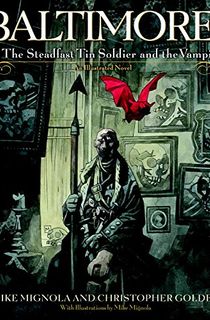
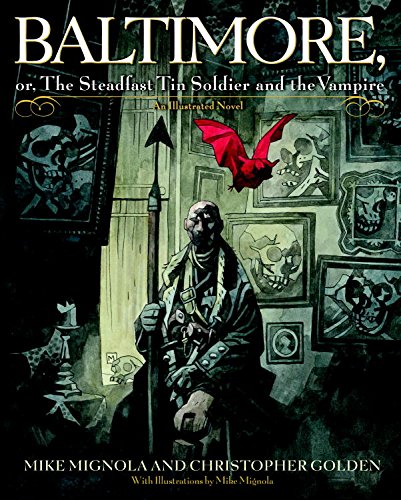
Baltimore,: Or, The Steadfast Tin Soldier and the Vampire
Golden has worked with writer-illustrator Mike Mignola on several graphic novels, most notably for Hellboy, but Baltimore, or The Steadfast Tin Soldier and the Vampire is a unique World War I vampire story.
The debut title of The Outerverse follows Lord Henry Baltimore, a British officer who inadvertently changes the course of World War I by wounding a vampire on the battlefield.
Mignola thought up the first inklings of the plot after watching a boring movie and then connected his one-legged vampire soldier to the Hans Christian Andersen story “The Steadfast Tin Soldier” (his favorite Andersen story).
“Mike already had about 80% of the story kind of worked out in his head, like what he wanted it to be,” Golden remembers. “But the beauty of that is that there's so much overlap in our frames of reference. Mike is so in love with folklore and mythology and legend and all of that stuff.”
When Mignola wanted to go back to the time long before Bram Stoker, Golden was very intrigued by the prospect overall.
“If you're not sort of trying to reinvent even the lore around vampires and do your own thing to serve the kind of story you want to tell, I feel like you're doing yourself a disservice because you don't need to follow anybody's set of rules.
The first thing you should do in a vampire story is decide: am I going to do what's been done, or am I going to try to do something different?”
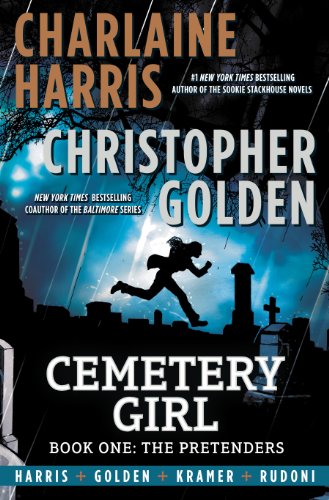
Cemetery Girl: Book One: The Pretenders (The Cemetery Girl Trilogy)
The Cemetery Girl Trilogy is phenomenal and truly a slept-on graphic novel series over a decade later. Book 1 is titled The Pretenders and is written by Charlaine Harris and Christopher Golden, with art by Don Kramer.
Yes, you read that right: Charlaine Harris, the #1 New York Times bestselling author of the Sookie Stackhouse novels and the Harper Connelly Mysteries.
In Cemetery Girl, Calexa Rose Dunhill is named after the grim surroundings where she awoke, bruised and bloody, with no memory of who she is or who left her for dead.
Calexa lives in a crypt of the cemetery and avoids human contact, but she can’t hide from the spirits she sees. She witnesses the murder of a girl by a group of teenagers, and when the spirit rises from the victim's body, it enters Calexa, allowing her to see the girl's memories.
Now, Calexa has the choice to come forward or remain in the cemetery.
The origin story of the trilogy started at a multi-genre convention.
“Maybe I was speaking out of school, I don't know, but I was at Dragon Con and I knew Charlaine and we were getting coffee and I was a huge fan of the Sookie Stackhouse books and Harper Connelly [Mysteries],” Golden remembers. “She’s an absolutely phenomenal person and a great storyteller.”
Harris was sort of down while sipping her coffee because she had this idea that she really wanted to write, but her publisher at the time was like, "Well, first you have to do XYZ."
The story just flowed out of her to Golden after they started collaborating. She would write some scenes, Golden would edit, then he would write, and Harris would revise a bit.
“Charlaine is such a huge name in publishing and was so busy publishing so much at the time, so some people assume that I wrote those graphic novels or that Charlaine plotted them and I scripted them and stuff like that,” Golden said. “That is not the case, to be clear.”
The pair wrote those three books together as Harris was very interested in writing a graphic novel, and the results are really quite haunting and heartfelt.
Ararat: A Novel
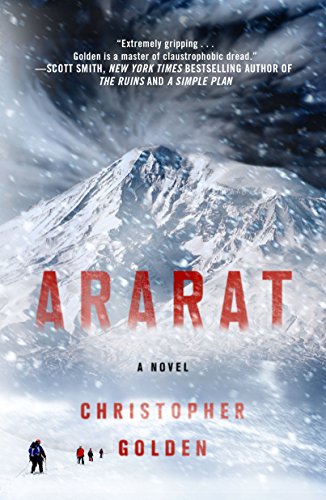
What if Noah’s Ark was real and buried deep within a cave on Mount Ararat with some dark and ancient presence? That’s the basic setup to one of Golden’s most-read thrillers, Ararat.
Trapped by a fierce blizzard, a multidisciplinary expedition team opens a mysterious coffin, unleashing a horrific demonic entity that threatens their lives and sanity.
Golden has a physical file on his desk with little ideas, and the inkling of a book about fighting demons inside Mount Ararat was on that paper file.
“I was fascinated by the concept of Noah’s Ark and the apocryphal stories of him fighting demons,” he notes. “I should say I grew up in the Catholic Church, but I consider myself a Christian atheist, by which I mean I don't believe there is a God.”
Golden does believe in the values of Christianity that he got from growing up Catholic. The whole writing process for one of his most popular books was fascinating for him, and his biggest challenge in writing Ararat was how to depict an actual Great Flood and ancient ships.
He got to speak with archaeologists to try and figure it out: “if you could have built something around that time, what would that actually have looked like?”
Ararat went on to receive a Bram Stoker Award and kicked off the Ben Walker trilogy. Subsequent novels take the character to Iraq and the fictional town of Jericho Falls, but Ararat is the most chilling book in the series.
The Ghosts Of Who You Were
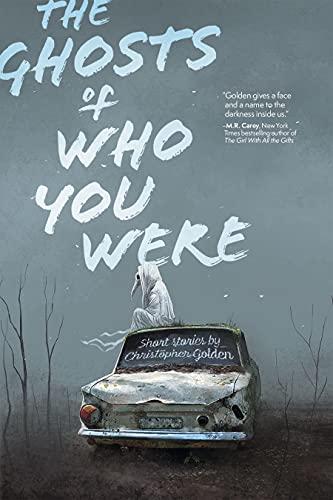
Featuring the Bram Stoker Award-nominated story "The Bad Hour," The Ghosts of Who You Were is Golden's finest collection.
The ghost stories here range from a hellish prison and a little door inside an elevator to a horrifying future where nightfall means you die. Golden was hot off 2019’s anthology The Twisted Book of Shadows, which he edited with his friend Jim Moore.
He was digging through 700 blind submissions for that collection, but of the three short story collections he’s done for his own work, The Ghosts is his favorite by far, starting with the foggy cover art, which was created by his friend/illustrator Peter Bergting, and cover design by graphic designer Errick Nunnally.
“I’m really proud of the stories in that book, and it’s time for another one,” Golden said. “I wrote short stories around the same time I started writing novels, and I don’t think I was very good at it for a really long time. I think I’m half-decent now.”

Road of Bones
The genesis for Golden’s Road of Bones was “born in an instant,” according to the author.
He read an article and immediately jumped down an information rabbit hole online: “It’s a real place, the [R504] Kolyma Highway in Siberia, and it’s 1,200 miles long,” Golden said.
He discovered that Siberian gulag prisoners made that road, and it’s one of the most dangerous places on the planet since you can die from the frigid temperatures within 15 minutes or so if you’re stranded on the highway. People still live there, though.
Estimates are that anywhere from 100,000 to 200,000 people died while building the highway. The imprisoned workers, many of them innocent of any actual crimes, were forced to build this highway. All their bodies were largely bulldozed under and paved over by the road.
Golden thought, “Somebody soon is gonna write a really crappy horror story about this idea, and it’s gonna be the somewhat obvious idea that the ghosts or the zombies of all these dead people under the Kolyma Highway are going to rise up to get their revenge.”
Golden pitched the plot with less than a page to his editor, and the same day they gave him the green light. His attitude toward the novel was a road book and a “frantic race for survival,” like his love for the John Wick movies and their all-killer, no-filler revenge plot pacing.
Like Golden, his documentary producer protagonist, Felix “Teig” Teigland, is in Russia and fascinated by driving the highway, envisioning a new series capturing Life and Death on the Road of Bones with a ride to the town of Akhust.
Road of Bones is no ordinary ghost town story, though. It’s stranger than that and weaves in historical trauma and grief. Golden tightens up the tension throughout; it escalates when Teig’s group encounters a strange girl wandering the tundra. She doesn’t speak but radiates an unsettling presence.
Soon, the supernatural elements become overt, as ghostly apparitions and spectral wolves begin to stalk them. The Road of Bones is a wild ride, and its beautiful and terrifying cover art started a “long and fruitful” collaboration between Golden and artist Jonathan Bush that continued with future cover designs.

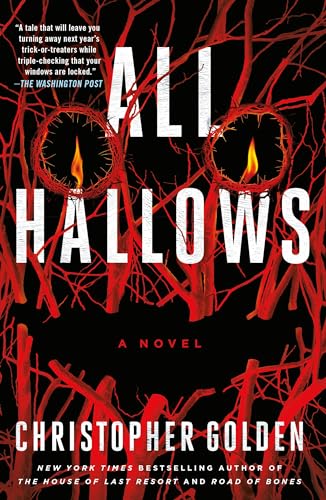
All Hallows: A Novel
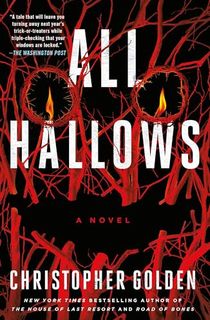
Set on Halloween night in 1984 in Coventry, Massachusetts, All Hallows follows suburban families slowly disintegrating due to long-kept secrets.
Four eerie, lost children in vintage outfits roam the neighborhood, begging local kids to protect them from an evil supernatural force known as the Cunning Man.
As neighborhood tensions rise, the kids are stalked, leading to gruesome transfigurations and a horror-struck night that melts the community like a jack-o'-lantern candle.
When Golden first started writing All Hallows and researching the 1980s, he had a good idea in his mind of what the local people of Coventry might be like. The only problem was that they were assumptions from pop culture and growing up on the East Coast.
“I came across a music video that I can’t find now, of four young guys in their early twenties, dressed up in their mukluks as reindeer herders,” Golden remembers.
Golden recalls that the four guys changed the lyrics to a Taylor Swift song to be all about how they can’t get girlfriends because all the girls they know grew up with them in such proximity that they’re all essentially their sisters, even if there are no blood relations.
“That changed my perspective entirely and made the book so much better,” Golden said. “My attitude toward the people that my main characters would encounter changed completely.”
Golden hid a lot of fun Easter eggs in the book, including a reference to a terrifying death scene in the 1943 horror film, The Leopard Man, where a woman is attacked by the titular villain, and blood flows underneath the door into her family’s home.
“When you have any moment like that, and it’s so impactful, it’s good to shout it out and say, ‘This is intentional,’” Golden said. “This is not me trying to pull a fast one!”
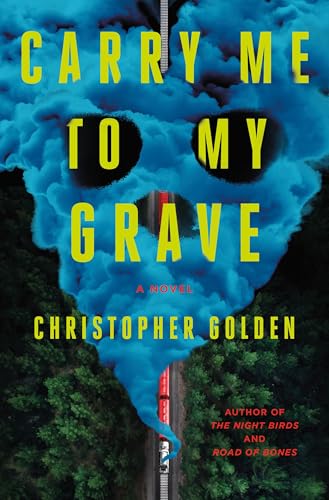
Carry Me to My Grave: A Novel
Carry Me to My Grave is one of Golden’s most affecting novels since it’s so personal just underneath its pre-apocalyptic surface. The author clarifies from the jump that the mother, Maggie Wise, and the siblings in the book are not his family.
Set in 1956, the story follows a Korean War veteran named Malcolm who is tasked with protecting his dead mother's body from ancient, vengeful evil forces while transporting her across the USA.
I let Golden know the story setup reminds me of my own mother, who recently passed away, and her gravesite is in New Hampshire.
“As [Malcolm’s] mother is dying, she extracts from him a promise to fulfill her final wish, which is that when she dies, he will take her body from Indiana to her birthplace in Maine, but it has to happen before the second sunrise after her death.”
It’s a very strange request, but Malcolm wants to be a good son, even though his mom is a complete narcissist and has made Malcolm and his siblings feel like nothing they do is adequate.
“My mom was a fantastic mother under very difficult circumstances for the first twenty years of my life. Unfortunately, her circumstances got much worse in a manner of her own making. She had a serious narcissistic personality disorder that didn’t really come out until things got bad. It made it very difficult. Maggie is not her, but in the aftermath of her death, you go through all these “what if” scenarios, but you know the reality is that not much really could have changed because people are who they are.”
Carry Me to My Grave is a breathless and visually descriptive horror-thriller. The primary antagonists are ancient, feral vampires, led by a ruthless main villain, Root.
They are animalistic predators, capable of brutal carnage and mind control, hunting the protagonist’s family to settle an old score. This plot just keeps chugging away like a runaway train.
Feature Image: Facebook


