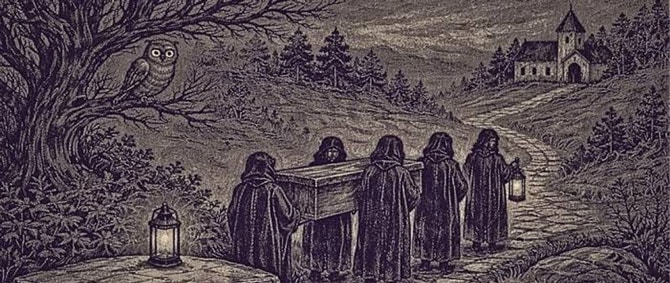
An Unexpected Discovery
Corpse roads were not entirely new to me. I had seen the term before in books on British folklore, usually mentioned in passing before the author moved on to another subject. I remember thinking I would come back to them one day, although I never quite did.
That changed while I was reading about medieval burial customs.
My notes at the time had nothing to do with ghost stories. They were full of references to parish churches, burial rights, and the way medieval communities organized everyday life.
Then the words "corpse road" appeared again. This time I stopped. One reference led to another. Local histories mentioned them. Books on folklore mentioned them.
Archaeologists mentioned them. Before long, I had a growing pile of notes on a subject I had barely considered before.
What struck me was how ordinary the story really was.
These roads were not created because people believed they were haunted. They existed because communities had no alternative.
The folklore came much later.
Let's learn more about Britain's forgotten corpse roads.
A Problem Every Village Faced
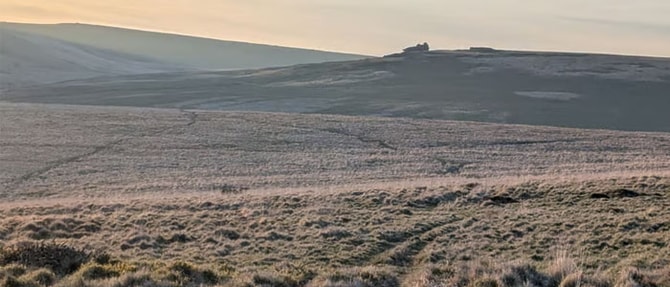

The Lych Way at dusk showing wide rutted tracks
Photo Credit: torbaytodayIt is easy to assume every village once had its own churchyard.
In reality, medieval England was rather more complicated.
Many settlements possessed a chapel where local people attended services, but burial rights often belonged to the parish's mother church instead. When somebody died, relatives and neighbors carried the body there, even if the journey meant crossing hills, streams, woodland, or open moorland.
Some routes were little more than a mile.
Others demanded several hours on foot.
That was simply accepted as part of life.
The best-known example is probably the Lych Way across Dartmoor. Tradition connects the route between Bellever and Lydford with funeral parties travelling to St Petroc's Church, where burial could take place.
Historians continue to debate individual details, but there is no doubt that long funeral routes like this once formed part of everyday life in many parts of Britain.
Cumbria, Yorkshire, Devon, and Wales all preserve traditions of similar paths.
In northern England another name survives alongside them.
The expression lyke way comes from the Old Norse word lik, meaning a corpse. It is one of those small pieces of evidence that quietly reminds us just how old these customs really are.
Roads Made by Repetition
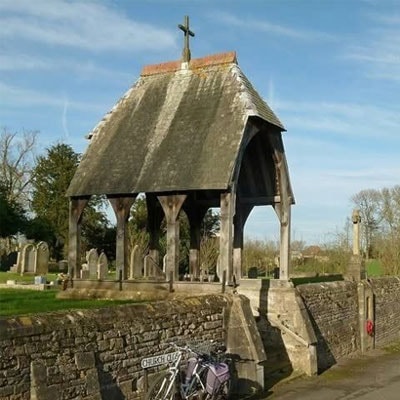
Lych gate
Photo Credit: FacebookNobody set out to build a corpse road.
The paths developed because the same journey was made over and over again.
The body was normally carried on a wooden bier. Several people shared the weight, changing places whenever someone became tired.
It was work no family expected to do alone. Friends and neighbors understood that one day they would need the same help themselves.
Reading old local accounts, I found myself noticing the small details rather than the larger story.
There were references to coffin stones where the bier could be lowered for a few minutes. Not every stone bearing that name can be connected with a funeral route, but enough examples survive to suggest the custom was genuine.
Streams appear surprisingly often as well.
Several traditions describe funeral parties pausing before crossing a parish boundary. In a few places, fresh bearers took responsibility for the final stretch.
Another discovery answered a question I had never thought to ask.
Most of us have walked through a lych gate at some point without wondering why it carries that name. The word comes from the Old English lich, meaning a dead body.
Traditionally, the procession paused beneath the shelter while the priest came out from the church before leading everyone into the churchyard.
It suddenly seemed rather obvious.
The clue had been there all along.
When the Stories Began
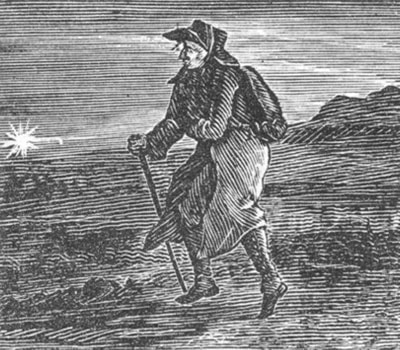
Illustration of a man following a corpse candle
Photo Credit: Fireside HorrorAs villages gradually acquired burial grounds of their own, many of the old funeral routes fell out of regular use.
The paths remained.
So did the memories.
That seems to have been enough.
Across Cumbria, Yorkshire, Wales, and parts of Devon, stories began to collect around the old roads. People claimed to have seen silent funeral processions where no funeral was taking place.
Some described shadowy mourners carrying a coffin towards the church before vanishing. Others mentioned only the coffin itself, moving steadily along the familiar route.
The accounts differ in their details.
What surprised me was how similar the basic story remained despite appearing in different counties.
Then there were the lights.
Welsh tradition preserves the canwyll corff, or corpse candle. Small flames were said to drift across fields, often following the line of an old funeral path. To many communities, they were taken as a sign that another death would soon follow.
Modern explanations vary.
Marsh gas is often mentioned. So are distant lanterns, unusual weather conditions, and simple mistakes made in poor light. Whether any one explanation fits every story is difficult to say.
Another tradition caught my attention for a different reason.
Several northern accounts describe the bier becoming unexpectedly lighter during a difficult climb, almost as though another pair of hands had taken hold.
Elsewhere the opposite happened. The weight increased so suddenly that the procession stopped before continuing.
The stories were remembered.
That, perhaps, is the interesting part.
The Roads That Remain
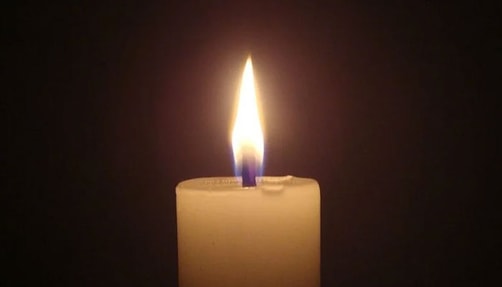
Corpse candle
Photo Credit: library.walesResearching corpse roads changed the way I look at old footpaths.
Not every track has an unusual history behind it, of course. Most are exactly what they appear to be.
Some are not.
A quiet path climbing towards an isolated church can be something far older than it first appears. The landscape may have changed very little since the last funeral party passed that way.
The church still stands. The stream still marks the parish boundary. In some places even the coffin stone remains beside the track.
The ghost stories may or may not be true.
The roads certainly are.
For centuries they carried neighbors, friends, and families making one final journey together because there was simply no other way of reaching consecrated ground.
That history survived long enough for folklore to gather around it, and perhaps that is why corpse roads continue to capture people's imagination today.
I began researching them expecting another piece of British folklore.
I finished with a much greater appreciation of the communities that created them.
The legends are memorable.
The roads themselves are unforgettable.
Further Reading
- Ronald Hutton, The Stations of the Sun
- Jacqueline Simpson and Steve Roud, A Dictionary of English Folklore
- Jennifer Westwood, Albion: A Guide to Legendary Britain
- W. G. Hoskins, The Making of the English Landscape
- Bob Trubshaw, Explore Folklore
Feature Image: Spooky Isles


